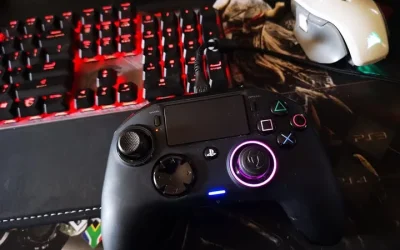

Every mechanical keyboard ad seems to promise faster, better typing, but does a mechanical keyboard improve typing speed in any measurable way, or is the appeal mostly about feel and sound rather than actual words per minute?
- For beginners and casual typists, switching to a mechanical keyboard has little to no measurable effect on speed.
- Experienced typists sometimes see a modest 2 to 5 WPM gain thanks to tactile feedback and consistent actuation.
- The bigger, more consistent benefit across skill levels is improved accuracy, not raw speed.
- Actuation force and travel distance affect fatigue over long sessions more than they affect top speed.
Speed vs Accuracy: Two Different Questions
Typing speed and typing accuracy get lumped together in most marketing, but they respond differently to keyboard hardware. Speed is mostly a function of muscle memory, practice, and touch-typing technique. Accuracy is more sensitive to how a keyboard physically behaves under the fingers.
That distinction matters because most of what a mechanical keyboard genuinely improves falls closer to the accuracy and consistency side of the equation, not raw words per minute.
What Actually Changes With a Mechanical Switch
- Actuation point consistency: mechanical switches register a keystroke at a specific, repeatable point in the travel, unlike some membrane keyboards where the feel can vary key to key.
- Tactile or audible feedback: tactile bumps or clicky sounds confirm a keystroke registered without needing to fully bottom out the key.
- Reduced double presses: tighter manufacturing tolerances on quality switches reduce accidental double inputs and missed keystrokes.
- Lower actuation force options: lighter switches let fingers move on to the next key sooner instead of pressing through more resistance.
Each of those factors nudges accuracy and consistency upward. Speed, on the other hand, is mostly capped by how fast a person’s brain and muscle memory can form and execute the next keystroke, which a keyboard cannot really speed up.
So Who Actually Sees a Speed Difference
The honest answer depends heavily on typing skill level.
- Beginners and casual typists: keyboard type barely registers as a variable. Technique and practice dominate results.
- Intermediate typists: may notice slightly more comfortable, consistent sessions, but speed gains are minimal.
- Advanced typists (80+ WPM): this is where a measurable, if modest, difference shows up, commonly cited in the range of 2 to 5 WPM when moving from a mushy membrane board to a well-tuned mechanical one.
Bottom Line: A mechanical keyboard will not turn a 40 WPM typist into a 70 WPM typist. The people who benefit most in raw speed terms are already fast typists fine-tuning their setup, not beginners looking for a shortcut.
Where the Bigger Wins Actually Are
If speed alone isn’t dramatically better, why do so many fast typists swear by mechanical keyboards? The answer is usually in the surrounding experience.
- Less fatigue over long sessions: not having to bottom out every key reduces cumulative finger impact during marathon typing days.
- Fewer correction stops: higher accuracy means fewer backspaces, which indirectly improves effective typing throughput.
- More enjoyable typing: people who enjoy how a keyboard feels tend to type more, and more practice is what actually drives speed gains long term.
Switch Choice Matters More Than “Mechanical vs Not”
Not all mechanical switches behave the same way, and picking the wrong type can actually work against speed and comfort.
- Linear switches (like Cherry MX Reds) suit fast, straight-down typists who prefer minimal resistance.
- Tactile switches (like Cherry MX Browns) give a physical bump that helps some typists avoid bottoming out.
- Clicky switches (like Cherry MX Blues) add audible feedback but slightly more resistance, which some fast typists find slows them down marginally.
For general reference on actuation force ranges across switch families, Wikipedia’s keyboard technology overview breaks down how different switch mechanisms register input.
FAQ
1. Can switching keyboards alone make someone type faster immediately?
No, speed is built through practice and technique over time, a new keyboard mainly changes comfort and consistency rather than delivering an instant boost.
2. Do gamers benefit more from mechanical keyboards than typists do?
Gamers often care more about actuation speed and rapid key repeats for specific inputs, which is a related but slightly different benefit than general typing speed.
3. Is a lighter or heavier switch better for faster typing?
Lighter switches generally suit faster, lighter typists better, though personal preference and finger strength play a role too.
4. Should I take a typing test before and after switching keyboards?
It’s a reasonable way to see personal results, though expect any difference to be modest rather than dramatic, especially early on before adjusting to the new feel.
Final Take
A mechanical keyboard is unlikely to be a dramatic typing speed upgrade on its own, especially for casual or beginner typists. What it reliably improves is accuracy, consistency, and comfort over long sessions, and for already-fast typists, that translates into a small but real speed bump. If raw speed is the goal, practice matters more than hardware, but a good mechanical board makes the practice itself more pleasant.
Disclaimer: This article reflects general research summaries and personal typing experience, not a controlled scientific study conducted by ThePCGeek. Individual results will vary by typing style and switch choice.