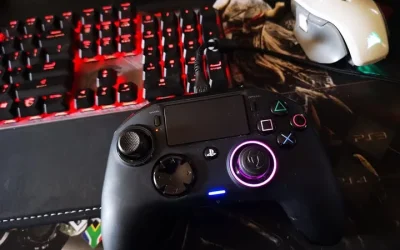

Wrist pain after a long day of typing sends a lot of people searching for a hardware fix, and mechanical keyboards come up constantly in those searches. Do mechanical keyboards help with carpal tunnel, or is that more marketing than fact?
- Mechanical switches can require less force to actuate than membrane keys, which may reduce finger strain over time.
- No major study proves mechanical keyboards alone treat or prevent carpal tunnel syndrome.
- Ergonomic design elements like split layouts and tenting matter more for carpal tunnel relief than switch type.
- A neutral wrist position and regular breaks do more for symptoms than any single keyboard purchase.
What Carpal Tunnel Syndrome Actually Involves
Carpal tunnel syndrome happens when the median nerve, which runs through a narrow passage in the wrist, gets compressed. According to the National Institute of Neurological Disorders and Stroke, repetitive hand motions, awkward wrist positioning, and prolonged pressure on the area are common contributing factors, though genetics and underlying health conditions play a role too.
Typing itself is rarely the sole cause, but repetitive strain from poor posture at a keyboard can certainly aggravate symptoms once they exist.
Where Mechanical Keyboards Might Actually Help
The case for mechanical keyboards easing strain comes down to actuation force and tactile feedback, not the switches being some kind of medical device.
- Many mechanical switches, like Cherry MX Browns, actuate around 45 to 60 grams of force, while some membrane keyboards require more force per keystroke.
- Tactile and clicky switches give a clear physical or audible signal the moment a key registers, which can reduce the habit of pressing harder than necessary “just to be sure.”
- Lighter linear switches let fingers stay relaxed instead of pressing through resistance on every keystroke.
Less force per keystroke, repeated thousands of times a day, is a reasonable theory for reduced cumulative strain. It is a plausible mechanism, but it is not the same as clinical proof that switching keyboards prevents or cures carpal tunnel.
What the Research Actually Says
Direct studies on mechanical switches and carpal tunnel specifically are limited. Most of the stronger ergonomic research focuses on keyboard shape and wrist posture rather than switch mechanism.
Fact Check: Research on split and ergonomic keyboard layouts has shown measurable reductions in wrist strain and nerve pressure compared to standard flat keyboards, but that research is about geometry and hand position, not whether the switches underneath are mechanical or membrane.
In other words, a well-shaped ergonomic keyboard with membrane switches could realistically do more for wrist strain than a flat, standard-layout mechanical board, even if the mechanical switches themselves feel lighter to press.
Ergonomic Factors That Matter More Than Switch Type
If carpal tunnel symptoms or general wrist discomfort are the real concern, these factors tend to have a bigger measurable impact:
- Split or angled layouts: keep wrists straighter instead of bent inward toward each other.
- Tenting: raising the middle of the keyboard slightly reduces forearm rotation strain.
- Wrist position: keeping wrists neutral and floating rather than resting heavily on a hard edge.
- Typing posture: elbows roughly level with the keyboard, shoulders relaxed, not hunched forward.
- Break frequency: short breaks every 30 to 60 minutes to let tendons and nerves rest.
Choosing Switches If Hand Comfort Is a Priority
If someone is set on a mechanical keyboard and wants to minimize strain, a few practical choices help:
- Pick a lighter actuation force switch (in the 35 to 45 gram range) over heavier ones.
- Consider tactile switches, since the bump provides feedback without needing to bottom out the key.
- Pair the keyboard with a wrist rest to keep the hand in a more neutral position.
- Look at low-profile switches if hand fatigue from finger travel distance is a factor.
FAQ
1. Can a mechanical keyboard cure carpal tunnel syndrome?
No, no keyboard can cure an existing medical condition, and anyone with persistent numbness, tingling, or pain should talk to a doctor rather than relying on hardware changes alone.
2. Are ergonomic mechanical keyboards better than regular ergonomic membrane keyboards?
The ergonomic shape matters more than the switch type, so a well-designed split membrane keyboard can be just as helpful as a mechanical one with the same layout.
3. What switch weight is best for sensitive hands?
Lighter switches in the 35 to 45 gram actuation range are generally easier on fingers that are already sore or fatigued.
4. Does typing speed matter if carpal tunnel is a concern?
Typing more slowly with proper wrist posture matters more than raw speed, since strain tends to build from awkward positioning and repetitive force rather than pace alone.
Final Take
Mechanical keyboards can genuinely feel gentler on the hands thanks to lighter actuation force and clearer feedback, and that is a real, sensible reason some people find them more comfortable. But they are not a proven treatment for carpal tunnel syndrome. If wrist pain is a real, ongoing issue, an ergonomic layout, proper desk setup, and a conversation with a doctor will do more than any single keyboard purchase.
Disclaimer: This article is for general informational purposes and reflects publicly available research summaries, not medical advice. Anyone experiencing persistent wrist or hand pain should consult a qualified healthcare provider.