
Shopping for a new display and typing “how much is a gaming monitor” into Google usually gets you more confused, not less. One listing says $130, the next says $1,300, and both claim to be “gaming monitors.” The truth is the price tag depends almost entirely on which specs you actually need versus which ones are just nice marketing bullet points.
- Budget gaming monitors start under $200 and cover 1080p at 144Hz or higher.
- Mid-range 1440p monitors with better panels and 165Hz to 240Hz sit around $250 to $450.
- High-end 4K or OLED gaming monitors typically run $700 to $1,200.
- Refresh rate, resolution, and panel type move the price more than screen size does.
The Real Price Breakdown by Tier
Gaming monitor pricing isn’t random. It tracks pretty closely with three things: resolution, refresh rate, and panel technology. Here’s roughly where things land right now.
- Entry-level (under $200): 1080p resolution, 144Hz to 165Hz refresh rate, usually a VA or basic IPS panel.
- Mid-range ($250 to $450): 1440p resolution, 165Hz to 240Hz, better color accuracy, sometimes an entry-level OLED panel starts showing up here.
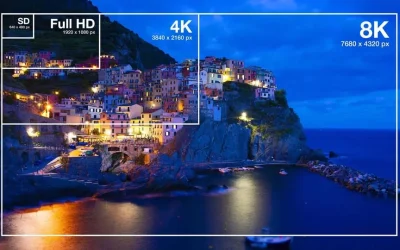
- High-end ($700 to $1,200+): 4K resolution, OLED or high-end IPS panels, 144Hz to 240Hz, HDR that actually looks like HDR instead of a checkbox feature.
Specialty monitors, like ultra-premium 3D displays or massive super-ultrawides, can push past $2,000, but that’s a small slice of the market most people never need to shop in.
What Actually Drives the Price Up
It’s tempting to assume a bigger screen costs more, and size plays a role, but it’s not the biggest factor. These matter more:
- Panel type: TN is cheapest, VA sits in the middle, IPS costs more, and OLED is the priciest by a wide margin.
- Refresh rate: Jumping from 144Hz to 240Hz on an otherwise similar monitor can add $100 or more.
- Resolution: 4K panels cost noticeably more to manufacture than 1080p or 1440p.
- Adaptive sync certification: Official Nvidia G-Sync modules add cost versus generic FreeSync/VRR support.
Reality check: A 240Hz 1080p monitor can actually cost less than a 144Hz 1440p one. Refresh rate and resolution don’t scale together, so don’t assume “higher number equals higher price” applies evenly across specs.
Is It Worth Paying More?
Not always. If competitive shooters are the main thing being played, a fast 1080p or 1440p panel in the $200 to $350 range covers that need without paying for 4K pixels that a mid-tier GPU can’t push at high frame rates anyway.
Where spending more actually pays off:
- Single-player, story-driven games where visual detail matters more than raw frame rate.
- Anyone also using the monitor for photo or video editing, where color accuracy counts.
- Owners of a high-end GPU that can actually drive 4K at high refresh rates.
According to RTINGS’ gaming monitor testing, plenty of mid-range panels now deliver performance that would have been flagship-tier just a few years ago, which is part of why the “sweet spot” price keeps drifting down.
FAQ
1. What is a reasonable price for a gaming monitor?
For most gamers, somewhere in the $200 to $350 range gets a solid 1080p or 1440p panel with a fast refresh rate. That’s the sweet spot where price and performance line up best.
2. Are expensive gaming monitors worth it?
Only if the rest of the setup can use what’s being paid for, meaning a GPU strong enough for 4K, or a workflow that benefits from wide color gamut and OLED contrast.
3. Why do some gaming monitors cost under $150?
Cheaper monitors usually use TN or basic VA panels, lower refresh rates, and skip extras like USB hubs or premium stands to hit that price point.
4. Does screen size affect the price a lot?
Less than expected. Panel type, resolution, and refresh rate move the price far more than an extra inch or two of screen size.
Prices mentioned are approximate and can shift based on retailer, sales, and region, so always check current listings before buying.