
Cranking DPI to the maximum a mouse supports feels like it should make a player faster, but that is one of the most common misunderstandings in PC gaming. How much DPI is good for a gaming mouse actually comes down to a completely different question: what happens once in-game sensitivity gets combined with it.
- Most competitive FPS players actually use a fairly low DPI, typically between 400 and 800.
- DPI alone means little without factoring in in-game sensitivity through effective DPI (eDPI).
- Higher DPI is not inherently more precise, it just moves the cursor further per inch of physical movement.
- The best DPI is whatever combination feels controllable and consistent for the specific mouse pad size and grip.
What DPI Actually Measures
DPI stands for dots per inch, technically referred to as mouse sensitivity in counts per inch, and on a mouse it describes how many pixels the cursor moves per inch of physical hand movement. A 400 DPI mouse moves the cursor 400 pixels for every inch moved; an 1600 DPI mouse moves it 1600 pixels for that same inch.
Higher DPI is not automatically better. It is a speed setting, not a precision setting on its own; actual precision comes from sensor accuracy combined with how sensitivity is tuned overall.
The Number That Actually Matters: eDPI
Effective DPI (eDPI) is DPI multiplied by in-game sensitivity, and it is the number that actually determines how far the cursor or crosshair moves for a given physical mouse movement. Two players can have wildly different DPI settings and still play identically if their eDPI matches.
- 800 DPI at 0.5 in-game sensitivity = 400 eDPI
- 400 DPI at 1.0 in-game sensitivity = 400 eDPI
- Both examples above feel identical in-game despite different DPI numbers
This is why simply copying a pro player’s DPI setting without matching their in-game sensitivity does not replicate their actual feel.
What Pro Players Actually Use
Tracking sites that aggregate professional FPS player settings consistently show most competitive players sitting around 400 to 800 DPI, with in-game sensitivity tuned so their effective sensitivity lands in a fairly narrow, low-to-moderate range. This favors precision over raw speed, and it typically pairs with a large mousepad to allow full arm or wrist sweeps without running out of physical space.
Tip: If the mouse cursor overshoots targets constantly or feels twitchy, the DPI or in-game sensitivity is likely too high, not the mouse itself.
General DPI Guidelines by Use Case
- Competitive FPS gaming: 400-1600 DPI, often on the lower end, paired with low in-game sensitivity
- General gaming and casual play: 800-1600 DPI is a comfortable middle ground for most people
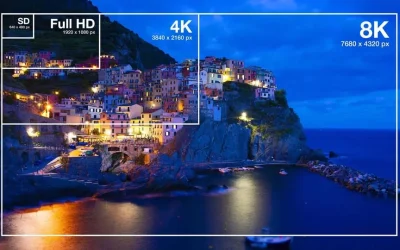
- High-resolution monitors (4K+): higher DPI (1600-3200) can help cover more screen real estate without excessive arm movement
- Design and photo editing: lower DPI (400-800) often gives finer cursor control for precise selections
Why More DPI Than Needed Can Hurt
Extremely high DPI settings (above 3200-6400) can amplify tiny hand tremors or accidental movements, making the cursor feel jittery rather than precise. There are also diminishing sensor accuracy returns at very high DPI on some lower-end sensors, where tracking can become less linear.
FAQ
1. Is higher DPI always better for gaming?
No, higher DPI just increases cursor speed per inch of movement. Precision depends more on matching DPI and sensitivity to a comfortable, controllable eDPI.
2. What DPI do most pro gamers use?
Most competitive FPS players sit in the 400-800 DPI range, combined with low in-game sensitivity for a low overall eDPI.
3. How do I find the right DPI for me?
Start around 800 DPI, adjust in-game sensitivity until aiming feels natural and controllable, then fine-tune from there rather than chasing a specific number.
4. Does DPI affect mouse accuracy or just speed?
It primarily affects cursor speed and resolution, not raw sensor accuracy, though very high DPI settings can expose accuracy limitations on cheaper sensors.
Final Take
Good DPI for a gaming mouse is not a single universal number, it is whatever combination of DPI and in-game sensitivity produces a controllable, consistent feel for a specific mousepad size and grip style. Most competitive players land in the 400-800 DPI range for a reason, but casual players often do fine anywhere from 800 to 1600, and chasing the highest DPI a mouse offers rarely translates into better actual performance.
This article reflects the personal experience and opinions of the author and is intended as general guidance, not a professional or technical certification.