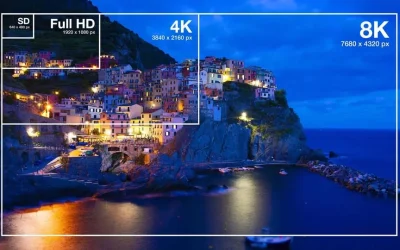

Spec sheets throw around a lot of numbers that don’t mean much without context. Working out what gaming pc specs do i need gets a lot simpler once it’s broken down by resolution and what’s actually going to run on the machine.
- GPU choice should be driven by target resolution first, that single spec has the biggest impact on gaming performance.
- 16GB RAM is the floor for 2026, 32GB is the more comfortable, future-proof choice for most new builds.
- CPU matters less than people assume for pure gaming, a mid-range Ryzen 5 or Core i5 pairs fine with most GPUs.
- A 2TB NVMe SSD and a power supply with real upgrade headroom round out a well-balanced spec list.
GPU: The Spec That Matters Most
The graphics card determines the resolution and settings a system can comfortably handle, more than any other single component.
- 1080p: RTX 5060-class or equivalent, plus at least 8GB VRAM
- 1440p: RTX 5070-class or equivalent, 12GB VRAM is a comfortable target
- 4K: RTX 5080-class or higher, with 16GB+ VRAM for texture-heavy modern titles
VRAM specifically matters more than people expect at higher resolutions, since running out of it causes stutters even when the GPU core itself has enough raw power.
CPU: Good Enough Beats Overkill
A common mistake is overspending on CPU while underspending on GPU. For most gaming workloads, CPU demands scale much more slowly than GPU demands.
- 1080p and 1440p: a Ryzen 5 or Core i5 from the last two generations handles this fine paired with a solid GPU
- 1440p to 4K with a high-end GPU: step up to a Ryzen 7 or Core i7 to avoid CPU bottlenecking
- Competitive esports titles at very high frame rates benefit more from strong single-core performance than raw core count
RAM: 16GB Minimum, 32GB Recommended
16GB still works for lighter gaming, but 32GB has become the more realistic sweet spot as games and background software have both grown heavier. The performance gap shows up mostly as smoother frame consistency rather than a big FPS jump, which matters more than raw numbers suggest during actual play.
Storage: Speed and Capacity Both Matter
- NVMe SSD is the standard now for both OS and game installs
- 2TB comfortably fits 12-15 modern games without constant uninstalling
- 1TB works for a smaller, rotating library but fills up fast with a few AAA titles
Reality Check: A slightly weaker CPU rarely tanks the experience the way running out of VRAM or RAM does. If a budget has to get trimmed somewhere, cutting CPU tier before cutting GPU or RAM usually hurts less.
Power Supply and Cooling: Easy to Overlook
These don’t show up in benchmark charts, but they decide how reliable and upgrade-friendly a build ends up being.
- A quality PSU rated with headroom above the system’s actual draw, not right at the edge
- Look for 80 Plus Bronze certification or better, detailed by 80 PLUS, as a baseline efficiency standard
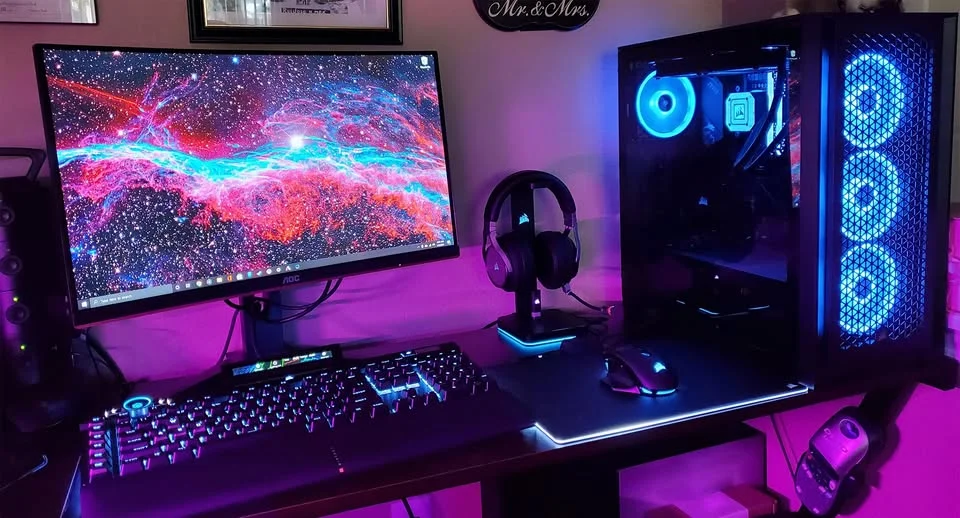
- At least 3-4 case fans arranged for balanced intake and exhaust airflow
A Quick Spec Checklist by Budget Tier
- Entry (1080p): RTX 5060-class GPU, Ryzen 5/Core i5, 16GB RAM, 1TB NVMe SSD
- Mid-range (1440p): RTX 5070-class GPU, Ryzen 7/Core i7, 32GB RAM, 2TB NVMe SSD
- High-end (4K): RTX 5080-class GPU or better, Ryzen 7/Core i7 or above, 32GB RAM, 2TB+ NVMe SSD
FAQ
1. What gaming PC specs do I need for 1080p gaming?
An RTX 5060-class GPU, a Ryzen 5 or Core i5 CPU, 16GB RAM, and a 1TB NVMe SSD cover 1080p gaming comfortably.
2. Is 16GB RAM enough for gaming in 2026?
It’s a workable minimum, but 32GB is the more comfortable choice for smoother performance and future-proofing.
3. Does CPU matter more than GPU for gaming performance?
Generally no. GPU has the bigger impact on frame rates and visual settings, though CPU still matters for avoiding bottlenecks at high frame rates.
4. How much VRAM is needed for 1440p gaming?
Around 12GB is a comfortable target for 1440p gaming with modern texture-heavy titles.
Final Take
Working out what gaming pc specs do i need comes down to picking a GPU for the target resolution first, then matching RAM, CPU, and storage around it without overspending on any single piece. A balanced mid-range build usually delivers better real-world results than one maxed-out spec propped up by weak components elsewhere.
Spec recommendations reflect general 2026 gaming performance guidelines. Requirements vary by specific game, so checking a title’s official system requirements is worthwhile for anything unusually demanding.