
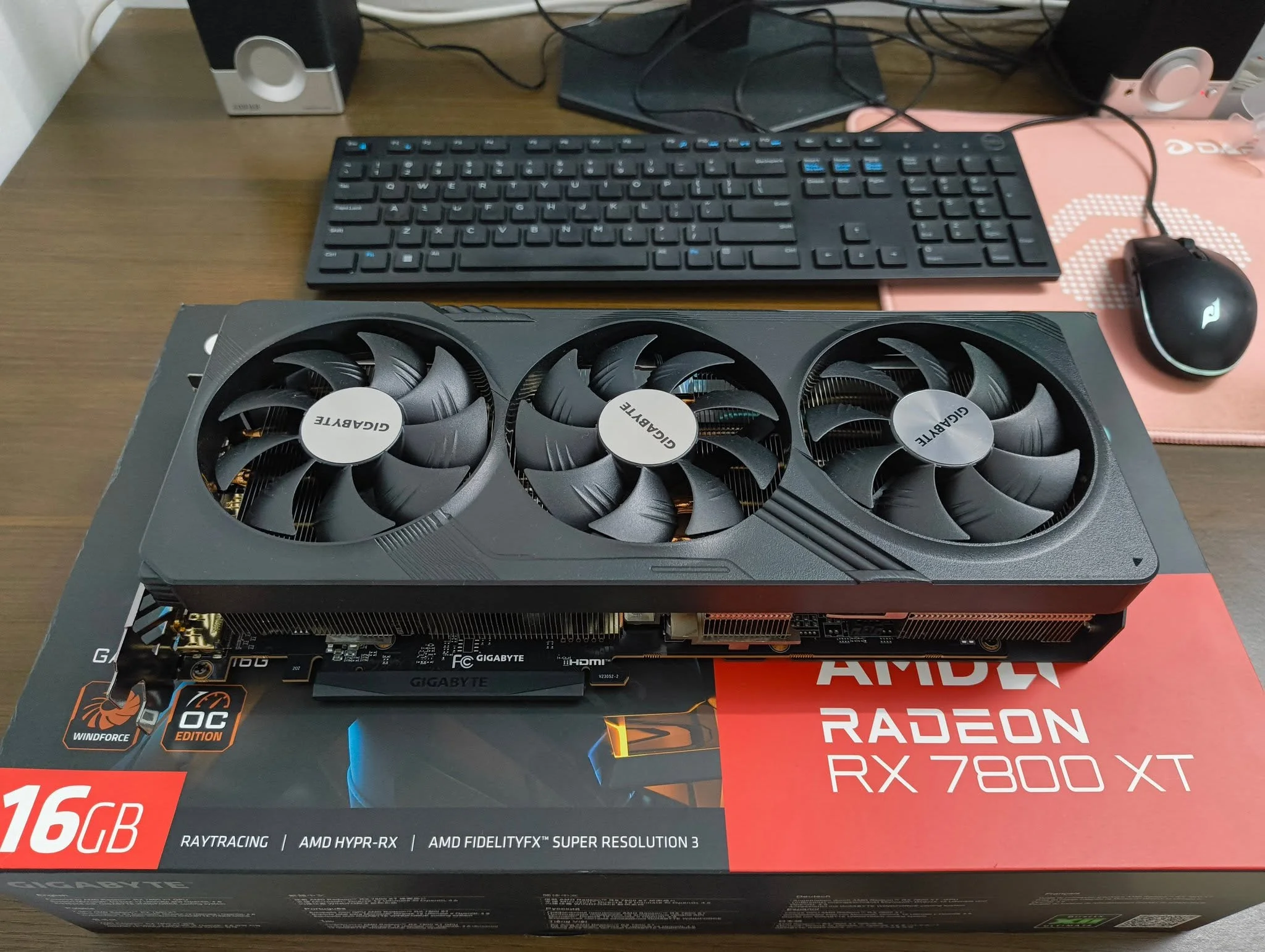
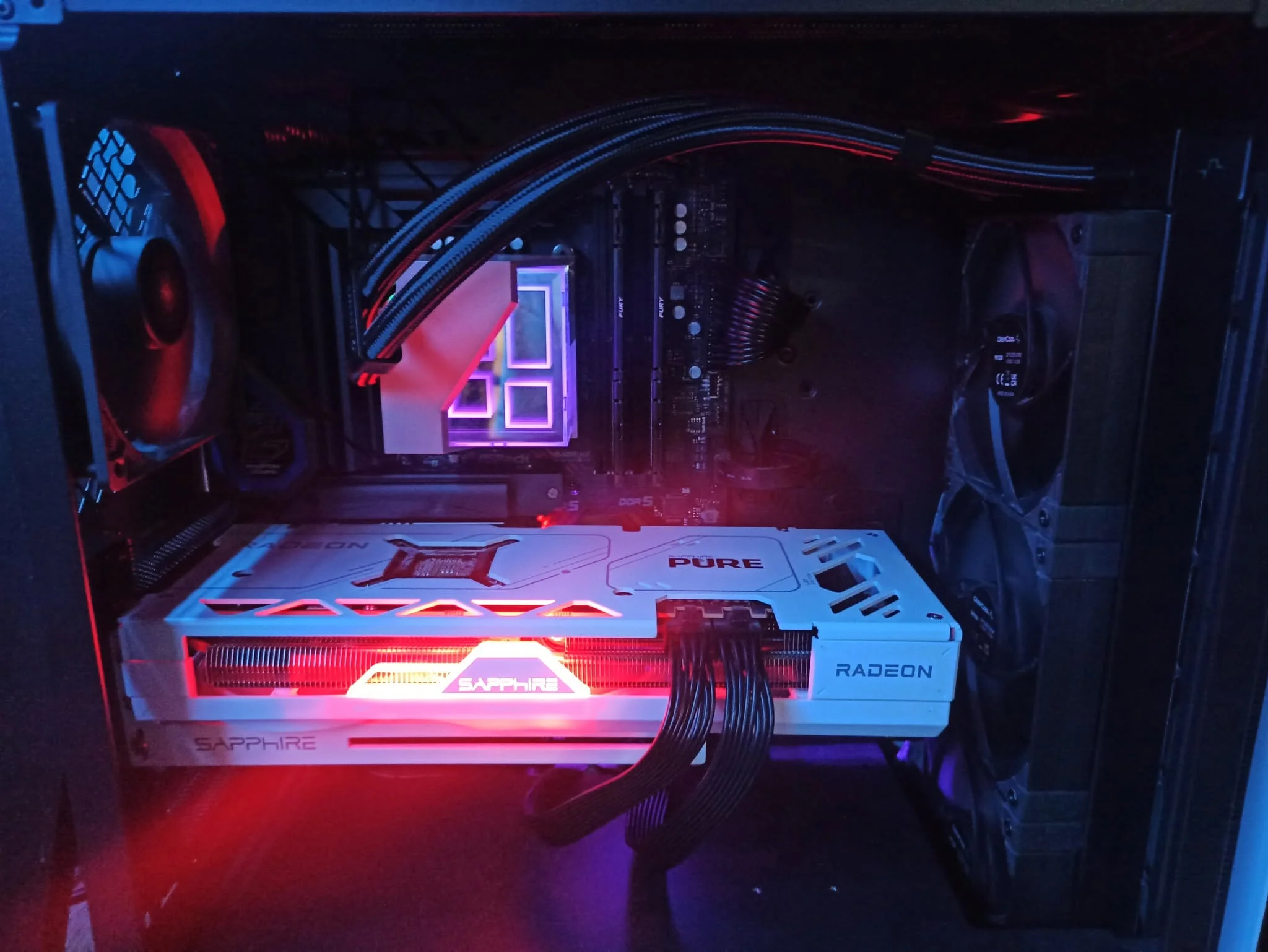
Long before RDNA 4 arrived, the AMD Radeon RX 7800 XT quietly became one of the more recommended 1440p GPUs of its generation, and it’s still worth a look now that pricing has settled. This review is built around the Sapphire Pulse Radeon RX 7800 XT.
Key Specs
| Spec | Details |
|---|---|
| Architecture | RDNA 3 (Navi 32), 5nm process |
| Stream processors | 3,840 (60 Compute Units) |
| Base / Boost clock | 1,295 MHz / 2,430 MHz |
| Memory | 16GB GDDR6, 256-bit bus, 624 GB/s bandwidth |
| TDP | 263W |
| Power connector | 2x 8-pin PCIe |
| Reference model tested | Sapphire Pulse, dual-fan, 95mm fans |
| Infinity Cache | 64MB |
RDNA 3 Where It Makes the Most Sense

The RX 7800 XT sits in the sweet spot of AMD’s RDNA 3 lineup, carrying a healthy 60 Compute Units without the extreme power draw of the flagship RX 7900-series cards. Key architectural traits include:
- Second-gen ray accelerators, a step up from RDNA 2 but still behind Nvidia’s equivalent tier in heavy RT workloads
- 64MB of Infinity Cache helping offset the 256-bit memory bus
- Full AV1 encode and decode support for streaming and content creation
Cooler and Physical Design
The Sapphire Pulse used as this review’s reference card offers a well-regarded, no-frills cooling design:
- Dual 95mm Angular Velocity fans, with dual ball bearings rated for a longer lifespan than sleeve bearing designs
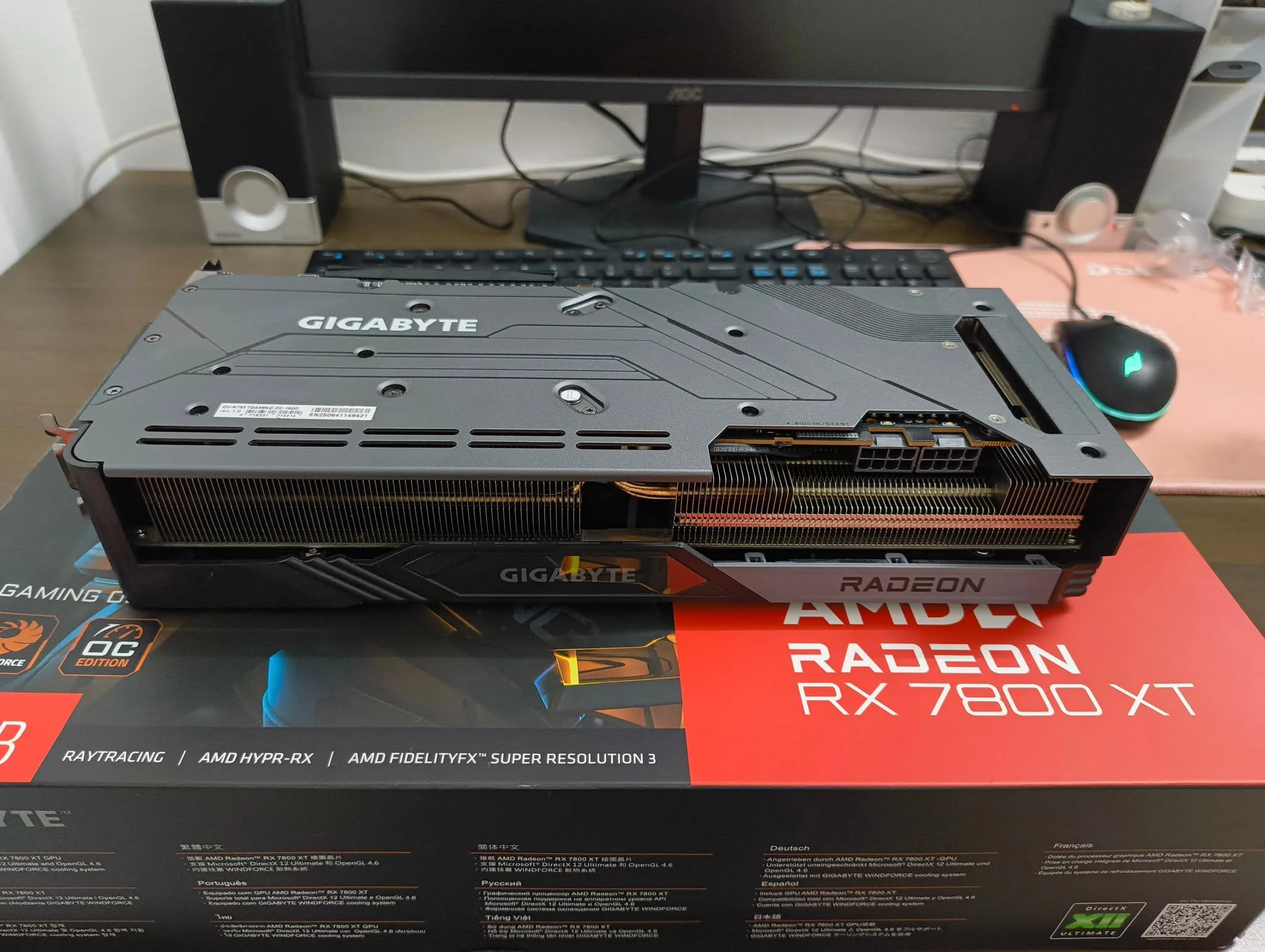
- A dense fin stack design tuned for downward air pressure over the heatsink
- Dual 8-pin power connectors, standard for a card in this power class
Sapphire’s Nitro+ variant offers a larger, quieter cooler at a price premium, while the Pulse strikes a solid balance between cost and thermal performance for most buyers.
Gaming Performance by Resolution

AMD positioned the RX 7800 XT as a 1440p-first card, and that’s exactly where independent testing shows it performing best.
- 1080p: Significant headroom, ideal for high refresh rate gaming at maxed settings
- 1440p: The card’s clear strength, running the large majority of current titles at high or maxed settings comfortably
- 4K: Achievable in select titles with settings dialed back or upscaling enabled, but not the primary use case
In raw rasterized performance, the RX 7800 XT has consistently traded blows with Nvidia’s RTX 4070 across independent reviews, often at a more favorable price.
Ray Tracing and FSR
Ray tracing performance on RDNA 3 trails Nvidia’s equivalent RTX 40-series tier in the heaviest workloads, though moderate ray tracing implementations run reasonably well, especially with FSR upscaling assistance. This generation predates FSR 4, relying on FSR 3.1’s algorithmic upscaling, which is solid but not as visually refined as the newer machine-learning-based approach AMD introduced with RDNA 4.
Power Draw and Efficiency
At a 263W TDP, the RX 7800 XT sits in a reasonable middle ground, requiring two 8-pin connectors but not demanding an oversized power supply. Real-world measured draw under gaming load tracks close to that rated figure, putting efficiency roughly in line with Nvidia’s competing RTX 4070 tier.
Thermal and Noise Behavior
The Sapphire Pulse’s dual-fan cooler handles the 263W TDP comfortably, with independent testing showing well-controlled peak temperatures under sustained load. Fan noise is generally reported as moderate, quieter than reference blower designs but a step behind Sapphire’s own higher-tier Nitro+ cooler.
Value Against the RTX 4070 and RX 9070
- Pricing for the RX 7800 XT has settled into a $460-$520 range depending on board partner and availability
- Against Nvidia’s RTX 4070, it generally trades rasterized performance wins while offering more VRAM at 16GB
- Buyers open to AMD’s newer RDNA 4 cards should also weigh the RX 9070 against this now-mature RDNA 3 option, particularly for FSR 4 support
Pros and Cons
What stands out
- Strong 1440p performance that consistently competes with the RTX 4070
- 16GB of VRAM and 64MB of Infinity Cache provide solid headroom for newer titles
- Mature pricing makes it one of the better value picks in its performance class now
What gives pause
- Ray tracing performance trails Nvidia’s equivalent tier in demanding titles
- No FSR 4 support, limited to the older FSR 3.1 upscaler
- Dual 8-pin power connectors are a bit less convenient than newer single-connector designs
- The RX 7800 XT is reviewed here using the Sapphire Pulse, a dual-fan card built around AMD’s RDNA 3 architecture.
- It’s a genuinely strong 1440p performer that consistently trades blows with Nvidia’s RTX 4070.
- Ray tracing and upscaling trail Nvidia and AMD’s newer RDNA 4 cards, since this generation lacks FSR 4.
- Pricing has settled into a $460-$520 range, making it one of the better value picks at this tier today.
FAQ
1. Is the RX 7800 XT good for 1440p gaming?
Yes, it’s widely regarded as one of the stronger options in its class for 1440p, handling most current titles at high or maxed settings.
2. Does the RX 7800 XT support FSR 4?
No, FSR 4 is limited to AMD’s RDNA 4 cards like the RX 9070 series. The RX 7800 XT uses the older FSR 3.1 upscaler.
3. How does it compare to the RTX 4070?
Generally competitive in rasterized performance with more VRAM, while trailing in ray tracing performance and upscaling maturity.
4. How much power does the RX 7800 XT need?
A 263W TDP with two 8-pin power connectors, requiring a mid-range power supply with adequate headroom.
The RX 7800 XT remains a genuinely compelling 1440p option, especially now that pricing has matured well past launch. It’s not the newest architecture on the market, but the fundamentals still hold up against current competition.
This review is based on independent testing and reporting as of publish date.