
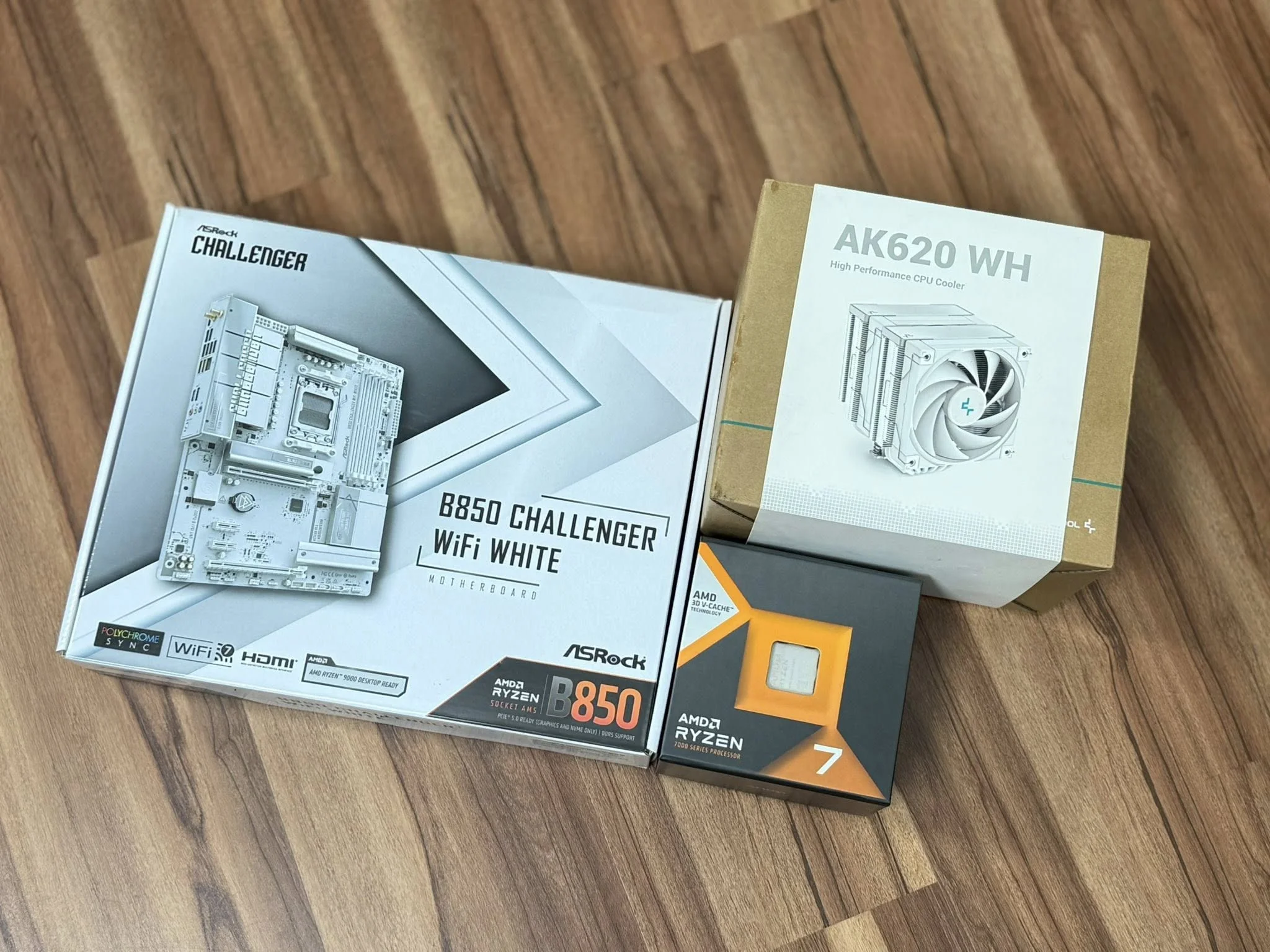
Choosing the best AM5 motherboard starts with your processor, case size, storage needs, and preferred connections. A sensible board should provide the features your build can use without adding unnecessary complexity. If compatibility is unclear, our guide to choosing a motherboard for your CPU explains the key checks.
Recommended by Us

GIGABYTE B850 AORUS Elite WIFI7 AM5
- Broad Ryzen 9000, 8000 and 7000 series support
- Modern Wi-Fi 7 and 2.5GbE networking
- Strong 14+2+2 power design
- Three M.2 slots with thermal protection
- Includes PCIe 5.0, USB-C and EZ-Latch
- Maximum supported DDR5 capacity and memory speeds are not listed
- Only three M.2 slots may be limiting for storage-heavy builds
- Detailed rear and internal USB port counts are not provided

GIGABYTE B850M AORUS Elite WIFI6E ICE AM5
- Distinctive snow-white styling suits light-colored PC builds
- Broad support for three generations of Ryzen processors
- Strong connectivity mix with WiFi 6E, 2.5GbE, and USB-C
- VRM and M.2 thermal guards cover key heat-producing areas
- Compact layout still provides four DDR5 DIMM slots and two M.2 slots
- Only two M.2 slots are listed, which may limit storage expansion for demanding builds
- A Micro-ATX layout generally offers less expansion room than a full-size ATX board
- Maximum supported memory capacity and DDR5 speeds are not specified in the provided data

ASUS ROG Crosshair X870E Hero AM5
- Robust 18(110A)+2(110A)+2-stage power solution
- Broad Ryzen 9000, 8000, and 7000 Series processor support
- Strong storage expansion with five M.2 slots
- Modern Wi-Fi 7, USB4, and PCIe 5.0 connectivity
- Extensive automatic and manual tuning features
- Advanced tuning options may be more than a straightforward build needs
- Maximum supported memory capacity and memory speeds are not listed
- ATX dimensions require a compatible case

ASRock B850M-X R2.0 AM5 Motherboard
- Broad support for three generations of AMD Ryzen AM5 processors
- PCIe 5.0 graphics and Gen5x4 M.2 expansion
- Compact Micro-ATX format with four SATA3 ports
- 2.5G LAN plus Wi-Fi 6E and Bluetooth support
- Dr.MOS-based 6+1+1 phase power architecture
- Only two DDR5 DIMM slots, limiting memory expansion flexibility
- The listing states Wi-Fi 6E and Bluetooth support but does not clarify whether a wireless module is included
- Micro-ATX compatibility should be checked carefully when upgrading a pre-built system

MSI MPG X870E Carbon WiFi AM5
- Broad support for three generations of AM5 Ryzen processors
- Modern PCIe 5.0 and Gen5 M.2 expansion capabilities
- Strong wired and wireless connectivity selection
- Substantial thermal hardware around the MOSFET and M.2 areas
- Convenient push-button PCIe slot release
- Maximum DDR5 memory capacity and supported speeds are not listed
- VRM phase count and detailed power-delivery specifications are not provided
- ATX dimensions require a case that supports full-size ATX motherboards

ASUS ROG Strix B850-A Gaming WiFi AM5
- Strong 14+2+2 power solution with 80A stages
- Modern WiFi 7 and 2.5G wired networking
- Four M.2 slots provide ample storage expansion
- Compatible with three AMD Ryzen desktop processor generations
- Maximum DDR5 memory capacity and supported speeds are not listed
- The listing does not provide a complete rear and internal USB port count
- ATX dimensions require a case that supports full-size ATX motherboards

MSI MAG B650 Tomahawk WiFi AM5
- Broad support for multiple AMD Ryzen generations on the AM5 socket
- Fast wired and wireless networking options
- DDR5 memory support with speeds up to 6400+(OC) MHz
- PCIe Gen 4 M.2 storage and dedicated M.2 cooling
- Full-size ATX layout for a desktop gaming build
- The listing does not specify VRM phase count or detailed power-delivery ratings
- Maximum supported memory capacity is not provided
- The listed storage interface is PCIe Gen 4 rather than PCIe Gen 5
Which AM5 Board I Would Choose
For a balanced ATX gaming system, I would point most builders toward the GIGABYTE B850 AORUS Elite. It supports Ryzen 7000, 8000, and 9000 processors, has four DDR5 DIMM slots, and provides three M.2 slots alongside PCIe 5.0 connectivity. The 14+2+2 power design, Wi-Fi 7, and 2.5GbE networking also make it a well-rounded foundation for a modern desktop. GIGABYTE publishes product and support information on its official site.
If you are working with a smaller compatible case, the ASRock B850M-X R2.0 is the compact option I would consider. Its Micro-ATX layout includes two DDR5 slots, two M.2 connections, PCIe 5.0 graphics support, and 2.5G LAN. For a premium enthusiast system, I would instead choose the ASUS ROG Crosshair X870E Hero. It combines five M.2 slots, Wi-Fi 7, USB4, PCIe 5.0, and an 18+2+2 power-stage arrangement. Whichever board you choose, knowing when to update motherboard drivers can help you avoid unnecessary software changes.
FAQs
1. Which AMD processors work with AM5 motherboards?
AM5 motherboards support compatible AMD Ryzen desktop processors, but exact CPU support depends on the model and installed BIOS. Most boards shown here list Ryzen 7000, 8000, and 9000 support. Check the manufacturer’s CPU support page before ordering, especially when pairing an older board revision with a newer processor.
2. Do AM5 motherboards use DDR4 or DDR5 memory?
AM5 motherboards use DDR5 memory, so an existing DDR4 kit cannot be transferred to an AM5 build. Check the board’s DIMM count and the manufacturer’s memory support information before buying. Four-slot boards offer more physical expansion room, while a two-slot Micro-ATX model may still suit a straightforward gaming system.
3. Is B850 or X870E better for gaming?
Both chipsets can support a capable gaming PC. B850 is a practical choice when you need modern storage, networking, and PCIe connectivity without every enthusiast feature. X870E boards generally make more sense for builders who need extensive expansion, additional high-speed connections, or more advanced overclocking controls.
4. Will every graphics card work with an AM5 motherboard?
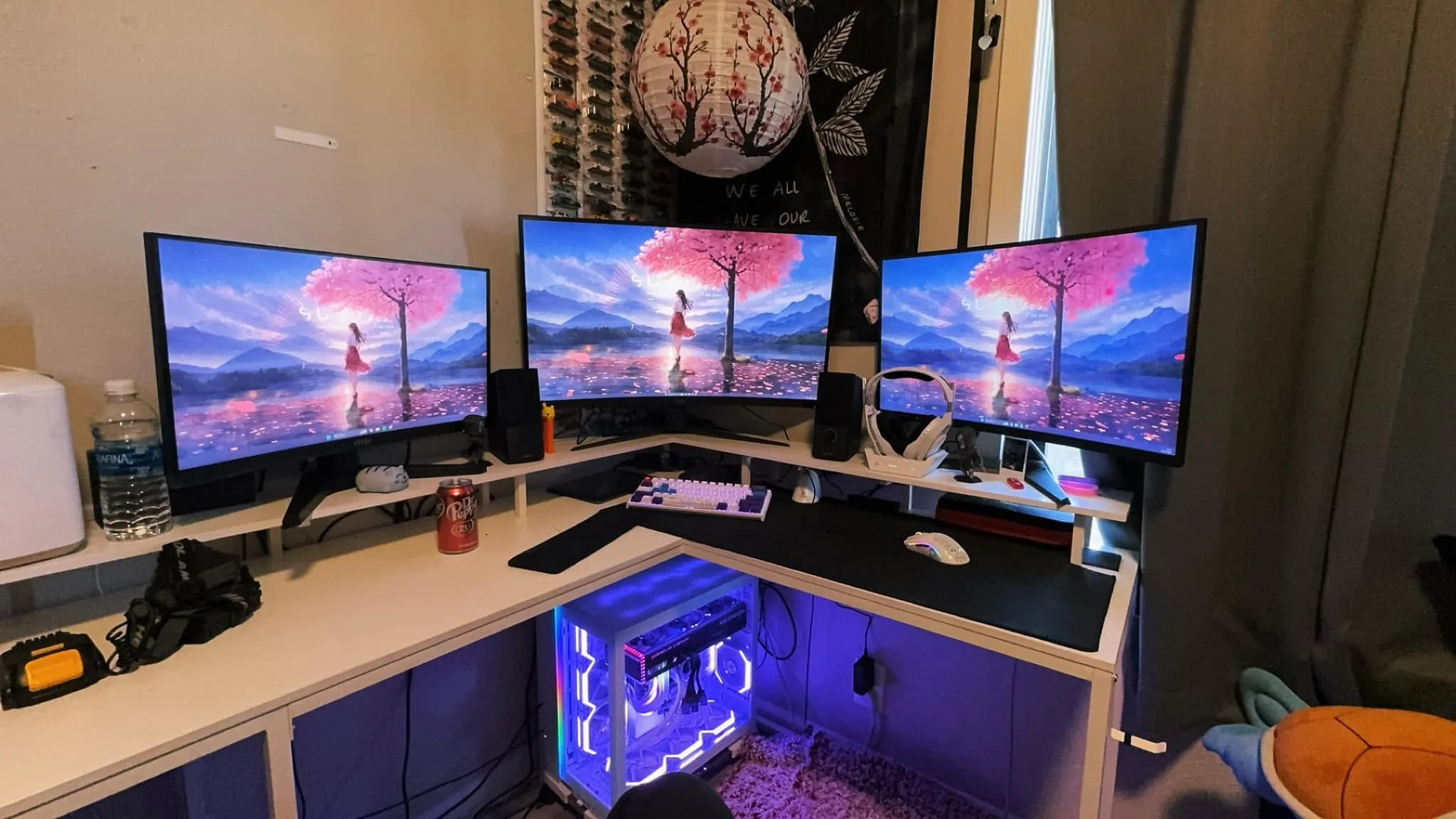
Modern graphics cards generally use a PCIe x16 connection, but physical clearance, power supply capacity, and case dimensions still matter. PCIe generations are normally backward compatible, although speeds depend on the connected hardware. Our explanation of GPU and motherboard compatibility covers the main fit and interface considerations.
5. Does an ATX AM5 motherboard fit in every case?
No. The case must explicitly support the board’s form factor. ATX boards need an ATX-compatible enclosure, while Micro-ATX boards fit many Micro-ATX and ATX cases. You should also check graphics card clearance, CPU cooler space, radiator support, and access to front-panel connectors before assembling the PC.
Editor’s Verdict
For the best AM5 motherboard in a balanced gaming build, I would choose the GIGABYTE B850 AORUS Elite for its useful storage, DDR5 support, and current networking. Builders who need a premium platform with broader expansion should consider the ASUS ROG Crosshair X870E Hero instead.