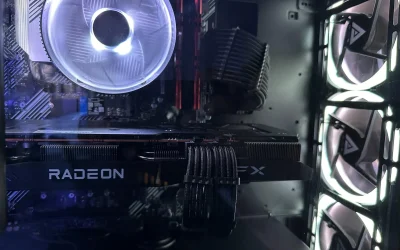

To clean a graphics card, power off and unplug the PC, take the card out if you can, hold the fans still, and blow dust from the heatsink and fans with short bursts of compressed air. Wipe surfaces gently with a lint-free cloth slightly dampened with 70 to 75% isopropyl alcohol.
- Power off and unplug the PC before you start.
- Hold the fan blades still while using compressed air.
- Never spray liquid directly or use strong air compressors.
- Do not take the cooler apart unless you know how.
Why and When to Clean Your GPU
Dust builds up on the heatsink fins and fan blades, which traps heat and forces the fans to work harder. Signs it is time to clean include louder fans, rising temperatures, and frame rates that fall as the card gets hot. Cleaning is also the first step recommended in our guide to GPU overheating. One guide suggests cleaning every 6 to 12 months, or more often in dusty rooms or homes with pets.
What You Need
- A can of compressed air or a hand-operated air blower
- A soft brush, such as a clean paintbrush
- A soft, lint-free cloth
- 70 to 75% isopropyl alcohol
- A screwdriver for the bracket, and a non-conductive surface to work on
Step-by-Step Cleaning
1. Power down and unplug
ASUS advises making sure the computer is completely powered off and unplugged. Touch a metal part of the case to discharge static before you handle anything.
2. Take the card out, or clean it in place
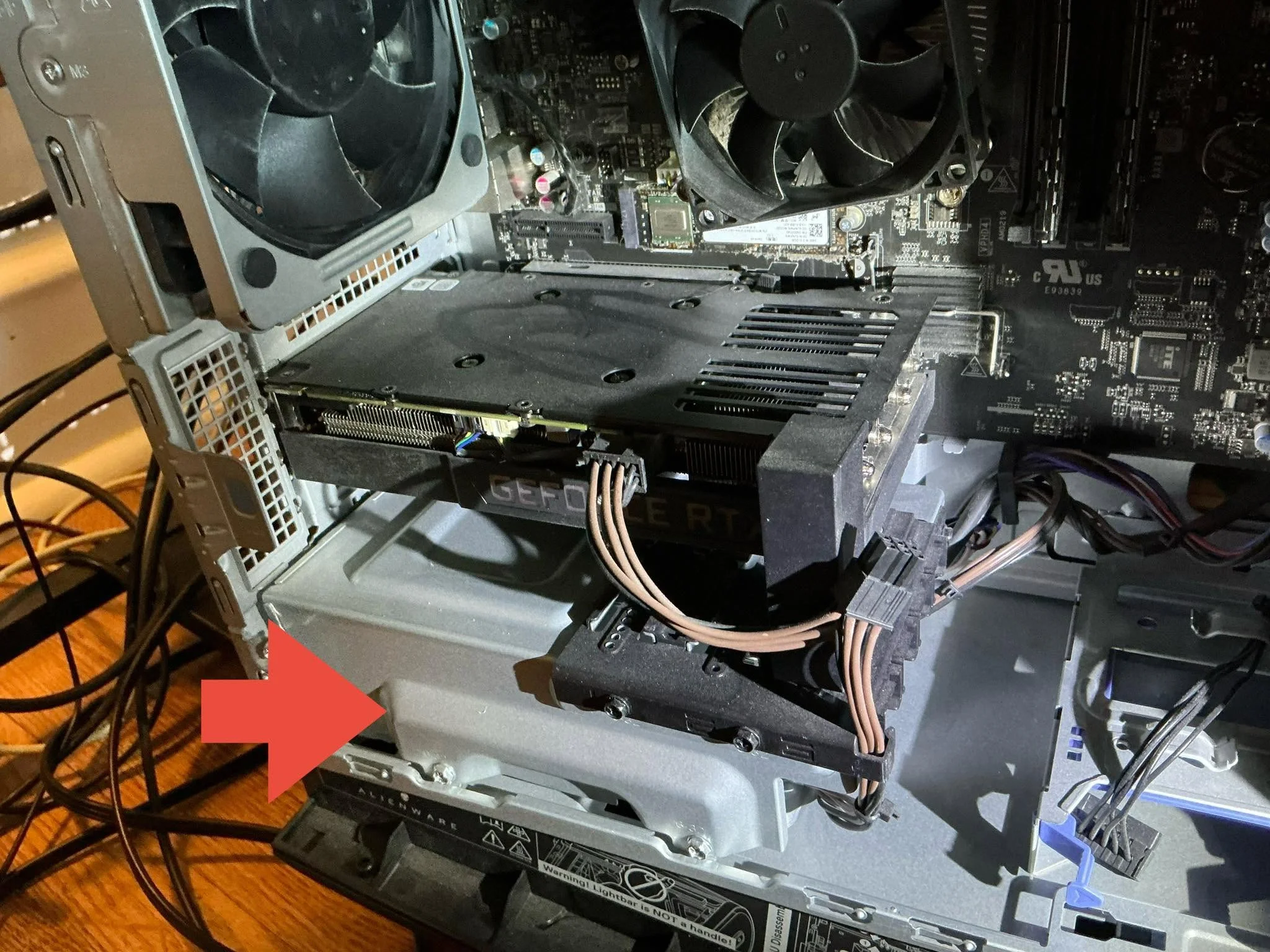
Removing the card gives better access. Unplug its power cables, unscrew the bracket, press the slot latch, and lift it out, using the same steps as how to install a graphics card in reverse. Place it on a non-conductive surface, such as its original box or an anti-static mat. If you are cleaning it in place, make sure the power is off first.
3. Hold the fans still and blow out the dust
Use short bursts of compressed air from a distance, aimed between the fan gaps and through the heatsink fins. Hold each fan blade still with a finger or a stick so it does not spin, since spinning fans can be damaged. ASUS specifically warns against strong airflow such as an air compressor, which can harm components. Keep the can upright, because tilting or inverting it can spray liquid.
4. Brush off stubborn dust
Use a soft brush or an air blower carefully on the cooler’s surface and fins. Do not use abrasive materials such as towels or tissue paper, which can scratch or leave fibers behind.
5. Wipe marks with isopropyl alcohol
Use a soft, lint-free cloth with 70 to 75% isopropyl alcohol to gently wipe off stains or particles. The ASUS cleaning guide says to keep the cloth only slightly damp and never to spray cleaning liquid directly onto the card. Let the surface dry fully before you refit the card.
6. Clean the case and refit the card
Blow dust out of the case, fans, and filters so it does not go straight back onto the card. Then refit the card, reconnect the power cables, and confirm the fans spin freely. For a second walkthrough, see the guides from CG Director and SlashGear.
What Not to Do
- Do not use a vacuum cleaner, which can build up static
- Do not spray liquid onto the card
- Do not disassemble the cooler unless you plan to repaste, since it may void the warranty. ASUS recommends against taking the thermal module apart yourself
- Do not touch the gold contacts or circuit board with wet or dirty hands
After Cleaning: Check the Result
Refit the card and run a GPU stress test or a demanding game, comparing temperatures with before. If they are still high after cleaning, the paste or fans may be the issue, as covered in whether GPU fans always spin. If liquid ever gets on the card, ASUS says to power off and unplug immediately, wipe it, tilt the card to drain, leave it for 24 hours, and contact support before using it.
Frequently Asked Questions
How often should I clean my graphics card?
One guide suggests every 6 to 12 months, or more often if your home is dusty or you have pets. Clean it sooner if temperatures rise or fans get loud.
Can I clean a GPU with compressed air?
Yes, using short bursts from a distance with the fans held still. Avoid strong air compressors, and keep the can upright.
Can I use isopropyl alcohol on my GPU?
Yes. Use 70 to 75% isopropyl alcohol on a soft, lint-free cloth that is only slightly damp. Never spray it directly onto the card, and let it dry fully.
Should I take the cooler off to clean it?
Usually not. ASUS recommends not disassembling the thermal module yourself, and doing so may void your warranty.