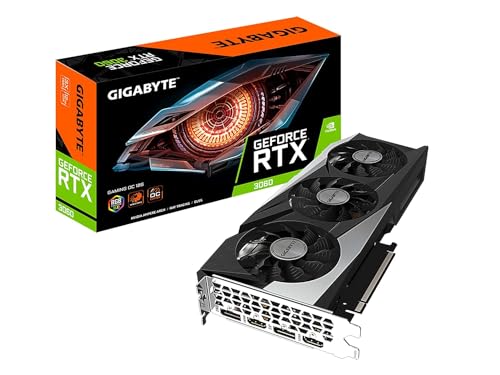

Piecing together an affordable gaming rig often feels like a balancing act between price and visual fidelity. When building on a tight allowance, pinpointing the best budget graphics cards ensures modern releases stay playable without forcing you into overpriced flagship silicon. Hardware choices today allow entry-level builders to enjoy fluid frame rates across standard resolutions easily.
Recommended by Us

- Compact 7.4-inch length accommodates smaller desktop PC enclosures
- Dual HDMI 2.1a ports offer convenient connectivity for modern monitors and TVs
- Equipped with 14 Gbps GDDR6 memory for smooth everyday gaming performance
- Dual-fan Ventus thermal solution maintains consistent system airflow
- TDP power consumption and PCIe bus interface are not specified in the listing
- 96-bit memory interface offers lower bandwidth than standard 128-bit cards
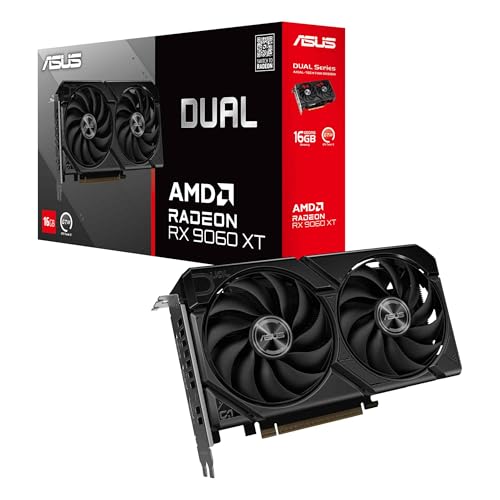
ASUS Dual Radeon RX 9060 XT 16GB
- Generous 16GB GDDR6 memory configuration
- High clock potential reaching up to 3250 MHz in OC mode
- Modern PCIe 5.0, HDMI 2.1b, and DisplayPort 2.1a connectivity
- Hardware Dual BIOS switch for quick acoustic management
- Compact 8-inch length fits easily into smaller PC enclosures
- TDP and power supply wattage recommendations are not stated in the listing
- 2.5-slot thickness can obstruct adjacent PCIe slots on compact motherboards

- Generous 10GB GDDR6 VRAM offers more capacity than standard 8GB entry-level options
- Cutting-edge display output support with three DisplayPort 2.1 connections
- Built-in AV1 video encoding support tailored for streamers and video editors
- Rigid metal backplate protects components and prevents board flexing
- Thermal design power (TDP) rating is not listed in the technical data
- PCIe interface revision and lane configuration are not specified
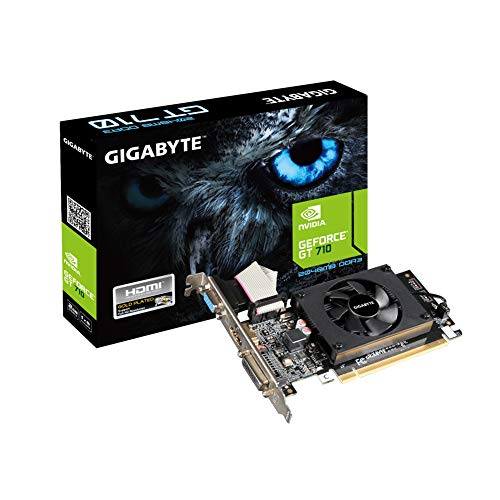
Gigabyte GV-N710D3-2GL REV2.0 2GB
- Compact low-profile design ideal for slim desktop cases
- Diverse video output options including HDMI, DVI-D, and D-Sub
- Dedicated 2GB DDR3 memory frees up system RAM
- Straightforward drop-in solution for multi-monitor workstation setups
- DDR3 memory and 954 MHz core clock are not suitable for modern 3D gaming
- TDP and specific PCIe interface generation are not specified in the listing

Gigabyte RTX 3050 Windforce OC V2 6GB
- Compact 7.5-inch length fits easily inside small form factor chassis
- Windforce dual-fan thermal solution delivers active cooling
- Ampere architecture provides modern ray tracing and Tensor core support
- Lightweight design helps prevent motherboard expansion slot strain
- Core clock speeds and power draw metrics are omitted from the listing
- Reduced 6GB memory capacity and 96-bit bus compared to standard 8GB models

ASUS Dual GeForce RTX 5060 OC 8GB
- Compact 9-inch dual-fan design easily fits into Small Form Factor (SFF) enclosures.
- Features next-generation GDDR7 memory and modern PCIe 5.0 bus support.
- Axial-tech fans provide focused downward air pressure with zero-RPM silent operation under low load.
- Updated video outputs supporting both DisplayPort 2.1b and HDMI 2.1b standards.
- 8GB memory buffer may limit extreme texture presets in memory-heavy modern games.
- Official TDP and power draw specifications are not provided in the product details.
- Requires 2.5 expansion slots of clearance despite its shorter overall card length.

ASRock Intel Arc A380 Challenger ITX
- Compact 169.9mm length fits comfortably in small form factor PC enclosures
- Hardware-accelerated AV1 encoding provides excellent streaming and rendering capabilities
- Quiet low-load operation thanks to the zero-decibel automatic fan-stop curve
- Generous display output selection with three DisplayPort 2.0 ports supporting up to 8K
- Requires an 8-pin auxiliary power connector and a 500W power supply rather than running purely on slot power
- Specific TDP wattage figure is not listed in the manufacturer specifications
- HDMI port is standard 2.0b rather than HDMI 2.1
Which Card Suits Your Build Style
Selecting the right hardware depends heavily on your chassis dimensions, current power supply, and target monitor resolution. Many builders wonder whether GPU or CPU affects FPS more during gaming sessions, but pairing a balanced card with your current processor is usually the fastest route to better visual performance.
- If you run a compact setup or home theater system, the ASRock Arc A380 Challenger ITX is a great pick because its small dual-slot profile fits easily into mini-ITX cases while offering 6GB of GDDR6 memory on a 96-bit bus.
- If you want higher memory capacity and modern display outputs, I would point toward the ASRock Arc B570 Challenger which delivers 10GB of video memory, three DisplayPort 2.1 connections, and a 2600 MHz clock speed using an efficient single 8-pin connector.
- If you lean toward team green features like ray tracing cores without heavy power demands, the GIGABYTE RTX 3050 WINDFORCE OC provides dependable cooling via two Windforce fans and 6GB of high-speed memory. Hardware updates from GIGABYTE keep these dual-fan designs running cool during extended play.
FAQs
1. How much video memory do I need for entry-level gaming?
For modern titles, aim for at least 6GB of dedicated video memory. Entry-level cards with 6GB to 10GB handle high-resolution textures comfortably without causing severe frame drops. Running out of memory forces the system to pull assets from slower system RAM, which introduces noticeable stutter.
2. Will a modern budget card work with my current motherboard?
Most modern cards connect via standard PCIe slots. Builders often ask if a GPU needs to be compatible with your motherboard, and the good news is that PCIe generations are backward compatible. A PCIe 5.0 or 4.0 card will run smoothly in an older PCIe 3.0 slot without issues.
3. Do older graphics cards lose speed over several years?
Hardware silicon does not physically slow down with normal use. When people wonder if GPU performance degrades over time, the real cause is usually dust accumulation causing thermal throttling, dried thermal paste, or newer games demanding far more compute power than older silicon can provide.
4. What power supply wattage is recommended for these cards?
Most budget cards operate comfortably on a 450W to 550W power supply. Many compact models rely entirely on a single 8-pin supplemental power connector or PCIe slot power alone. Always verify the manufacturer specifications to ensure your power supply has the necessary supplementary cables available.
Editor’s Verdict
For the best budget graphics cards, the ASRock Arc B570 Challenger stands out for its generous 10GB memory pool and advanced display connections, while the GIGABYTE RTX 3050 WINDFORCE OC remains a reliable alternative for compact dual-fan setups.