
Running a dedicated home server, network attached storage, or surveillance station puts non-stop pressure on mechanical components. Choosing the best hard drives for 24/7 operation means prioritizing vibration tolerance and sustained workload ratings. Many users wonder what is the difference between HDD and SSD in continuous environments where bulk capacity matters most.
Recommended by Us

- Engineered specifically for round-the-clock 24/7 enterprise workloads
- Includes Persistent Write Cache technology for data handling safety
- Stable Platter Technology optimizes mechanical reliability in multi-drive systems
- Standard 3.5-inch SATA design ensures wide backplane and server compatibility
- Read and write transfer rates are not specified in the listing details
- Requires internal 3.5-inch drive bay installation or a compatible external enclosure
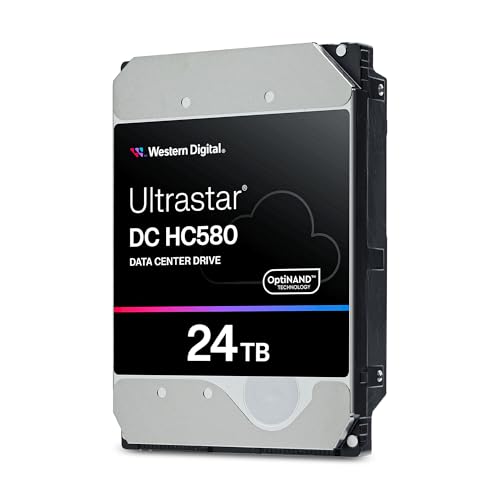
WD Ultrastar DC HC580 24TB Enterprise HDD
- Huge 24TB density drastically reduces rack and bay footprint
- CMR recording method ensures stable, predictable write operations
- Generous 512MB cache buffers demanding multi-stream workloads
- High 2.5 million hours MTBF rating for mission-critical uptime
- Renewed condition rather than brand new factory stock
- Specific sustained transfer speeds are omitted from the technical details
- 3.5-inch internal form factor requires dedicated desktop bay and SATA power

Toshiba MG Series 10TB Enterprise HDD
- Massive 10TB enterprise capacity engineered for round-the-clock 24/7 workloads
- Substantial 550TB/year workload rating built for business-critical data operations
- Stable Platter and Persistent Write Cache technologies enhance overall reliability
- Native Command Queuing (NCQ) optimizes drive commands under multi-threaded loads
- Acoustic noise and power draw are higher than standard consumer desktop drives
- Sustained sequential transfer rates are not stated in the technical specifications

- Massive 22TB storage density in a standard 3.5-inch form factor
- Engineered for demanding 24/7 enterprise, cloud, and server environments
- Swift data retrieval powered by a 7200RPM spindle speed
- Integrated power management helps keep operating costs efficient
- Specific sequential transfer rate numbers are not provided in the listing
- Requires internal 3.5-inch drive bays and standard desktop or server mounting

- Substantial 12TB capacity ideal for data centers and server racks
- Rated for heavy 550TB per year enterprise workloads and continuous operation
- Integrated Stable Platter and Persistent Write Cache technologies enhance stability
- Standard 7200RPM spindle speed for responsive data access
- Enterprise 7200RPM drives generate higher acoustic noise and heat than consumer drives
- Specific read and write benchmark speeds are not stated in the listing details

Toshiba MG Series 14TB Enterprise HDD
- Massive 14 TB capacity accommodates high-density storage arrays
- Built for enterprise workloads with continuous 24/7 duty and 550TB/year rating
- Stable Platter and Persistent Write Cache technologies enhance operational stability
- Standard 3.5-inch SATA interface provides straightforward hardware compatibility
- Specific sustained transfer rates are not stated in the official listing
- Enterprise 7200RPM mechanics typically generate more noise and heat than consumer drives

- Huge 24TB storage density minimizes physical slot requirements
- CMR architecture prevents the write degradation associated with SMR
- Helium-sealed construction supports cooler, more efficient operation
- Built specifically for 24x7 high-demand enterprise environments
- Listing represents a renewed drive rather than brand-new stock
- Exact sustained transfer speed rates are not specified in the product data
- Requires desktop or server 3.5-inch mounting bays with standard SATA power
Selecting the Right Continuous Storage for Your Rig
When assembling a continuous storage server, workload volume dictates the ideal drive architecture. For massive archival needs, I would point toward the Western Digital Ultrastar 24TB. It utilizes Conventional Magnetic Recording to maintain stable write integrity across demanding enterprise environments, backed by a generous 512MB cache and an MTBF rating of 2.5 million hours. System builders configuring multi-drive systems often check how many M.2 SSD slots does a motherboard have to install dedicated operating system drives while delegating bulk data loads to heavy-duty spinning disks.
If you prefer lower power consumption in a dense multi-bay chassis, the Seagate Exos 24TB is another high-capacity option I would highlight. Its helium-sealed enclosure reduces rotational friction and operating heat over prolonged operation. In addition, Seagate rates these enterprise models for around-the-clock reliability under persistent network workloads. For smaller home servers or entry-level backup arrays that do not require colossal volume, I would go with the Toshiba Enterprise 4TB, which features Stable Platter Technology and Persistent Write Cache to safeguard write operations against abrupt power cuts.
FAQs
1. What makes enterprise hard drives suitable for continuous operation?
Enterprise drives feature reinforced chassis components, advanced vibration dampening, and specialized microcode tuned for multi-bay racks. They also carry much higher mean time between failures ratings, often reaching 2.5 million hours. Technologies like persistent write caching further safeguard data integrity during unexpected outages, allowing systems to run without maintenance interruptions.
2. Why is Conventional Magnetic Recording preferred for server arrays?
Conventional Magnetic Recording avoids the performance degradation seen on shingled drives during prolonged random writes. It writes data tracks parallel to each other without overlapping, ensuring consistent write speeds across heavy server tasks. This predictability is critical when rebuilding RAID arrays or handling simultaneous streams in networked environments.
3. Can standard desktop hard drives run safely around the clock?
Standard desktop drives lack rotational vibration sensors and firmware intended for non-stop multi-drive enclosures. Sustained heat and relentless input-output cycles accelerate wear on desktop-class bearings. While flash users might wonder should you compress an SSD drive to save space, mechanical server storage relies on durable enterprise mechanics for persistent uptime.
4. How does helium sealing benefit high-capacity server drives?
Helium is significantly less dense than atmospheric air, drastically reducing aerodynamic drag on spinning platters inside sealed drive chambers. This lower turbulence minimizes motor strain, reduces power draw, and keeps internal temperatures cooler during non-stop operation. Cooler operational temperatures translate directly into enhanced longevity when several high-capacity disks operate closely together.
Editor’s Verdict
Investing in the best hard drives for 24/7 operation comes down to capacity demands and power design. If you need immense storage density and proven endurance, the Western Digital Ultrastar 24TB delivers top-tier reliability. For arrays where energy efficiency is critical, the helium-sealed Seagate Exos 24TB remains a superb enterprise choice.