

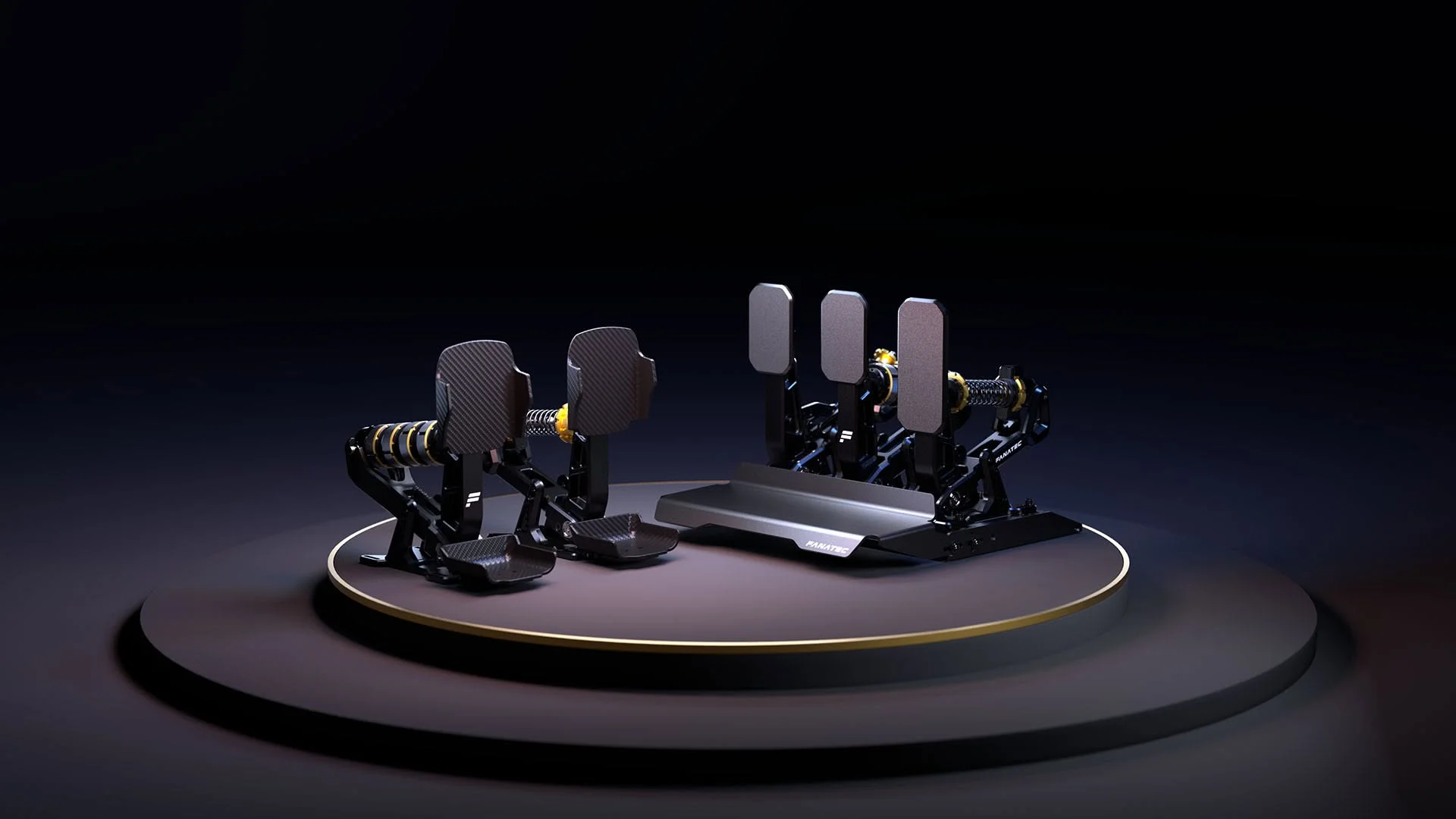
Most drivers upgrade their wheel first and their pedals last, but plenty of sim racers will say braking is where lap time actually gets made or lost. A big part of that comes down to pedal technology, and load cell pedals are the reason modern braking feels so much closer to a real car than the pedals bundled with a basic wheel kit.
- A load cell measures how hard you press, not how far the pedal travels.
- That force-based reading lets braking feel closer to a real car’s system.
- Higher-rated load cells suit heavy stompers, lighter ones suit precise modulation.
- A flexing rig can undo a good load cell pedal’s consistency entirely.
Force, Not Travel
Entry-level pedals, and most wheel bundles that come with a controller, use a potentiometer to measure how far the pedal has moved. That works fine for a gas pedal, but braking in real cars isn’t about how far you push, it’s about how hard.
- A load cell is a small strain gauge sensor that flexes almost imperceptibly under pressure and converts that force into an electrical signal, as explained in Asetek’s guide to load cell pedals.
- The game reads that force signal directly, so pressing harder applies more brake pressure regardless of how far the pedal physically moves.
- This mirrors how a real car’s brake system works, where pedal feel comes from hydraulic pressure rather than pedal travel distance.
Load Cell vs Potentiometer Pedals
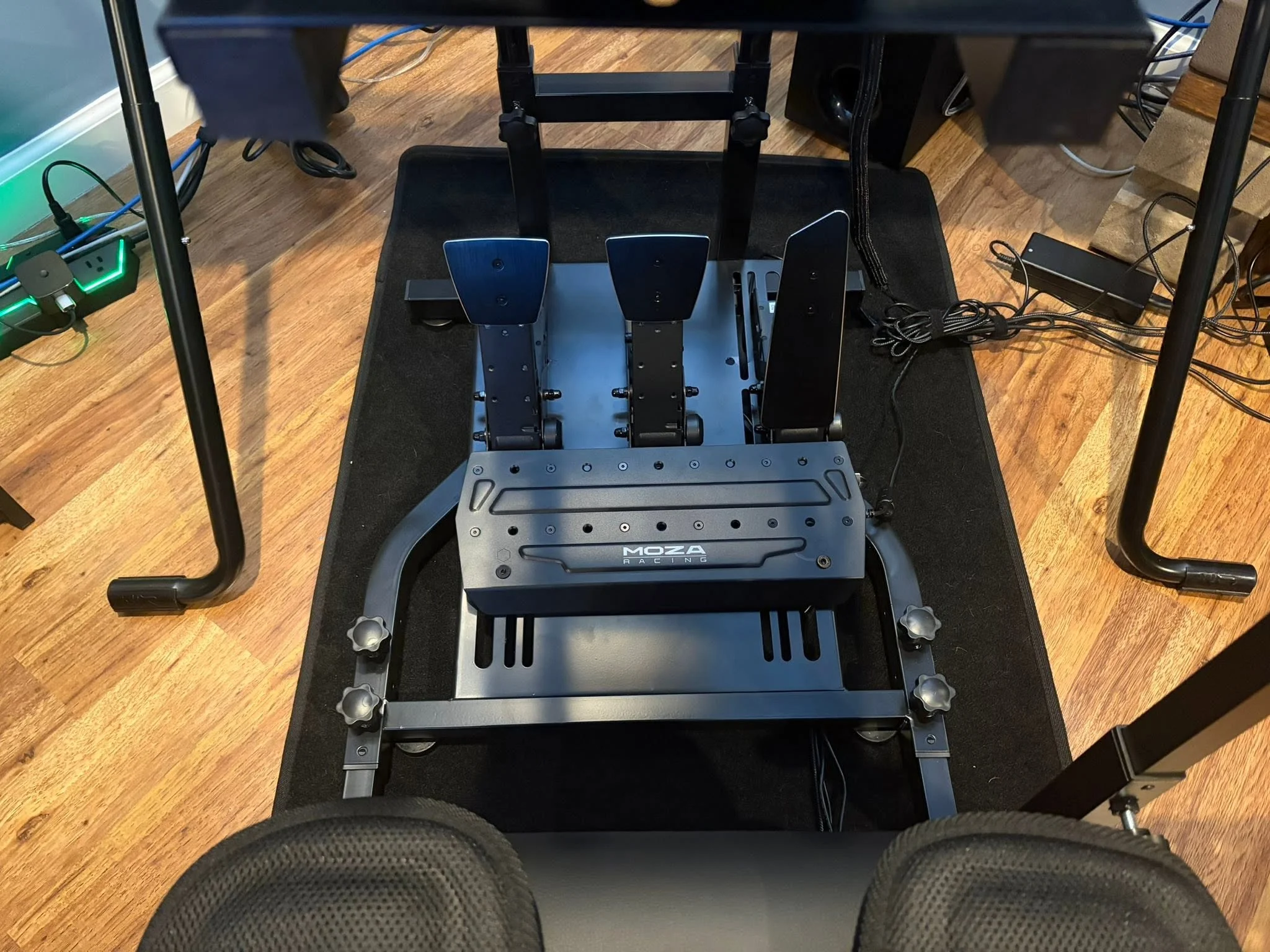
Potentiometer pedals aren’t bad, they’re just measuring the wrong thing for realistic braking. A short, stiff pedal with a load cell sensor tends to translate real driving habits into the sim far better than a long-travel pedal that rewards pushing it to the floor.
- Potentiometer pedals are simpler, cheaper, and fine for throttle and clutch, where travel-based input matches how those pedals work in a real car anyway.
- Load cell pedals are almost always used for the brake specifically, since that’s where force-based measurement makes the biggest difference to consistency and feel.
Load Cell Rating: What the Kg Number Means
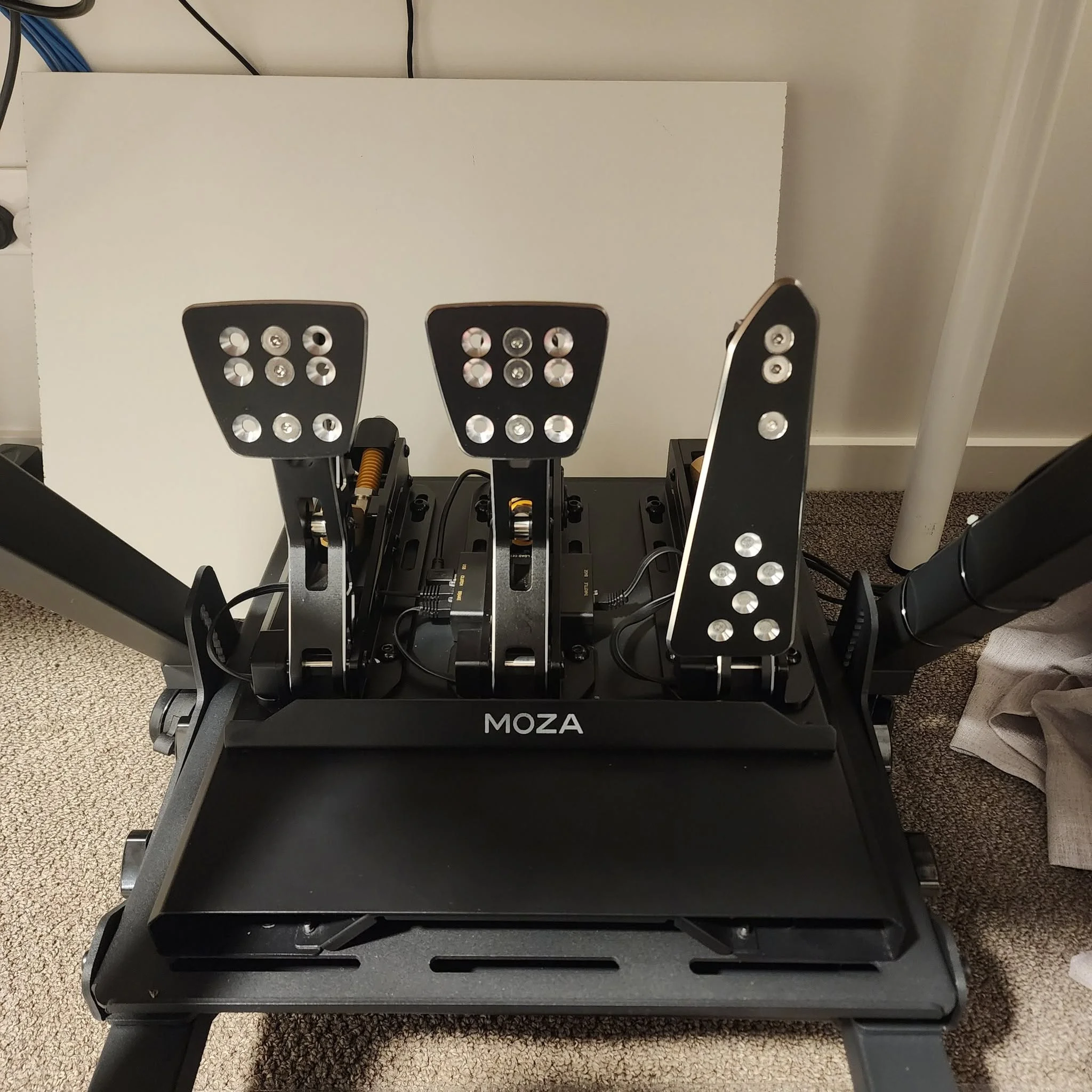
Pedal listings usually advertise a maximum load cell rating in kilograms, and it’s easy to assume higher is always better. In practice it depends on driving style.
- Entry sets like the Moza SR-P or SRP2 use lower-rated load cells that are easier to modulate for drivers still building brake feel.
- Higher-end sets like the Moza CRP2 or Heusinkveld Ultimate+ support loads up to and beyond 100kg, aimed at drivers who brake hard and want fine control at high pressure.
- Some premium sets add hydraulic dampers on top of the load cell, simulating the compression and rebound feel of a real hydraulic brake line rather than a stiff spring alone.
Heads Up: A stiffer, high-rated load cell isn’t automatically the right choice. Plenty of experienced sim racers actually run lighter brake pressure than beginners expect, since fine modulation matters more than raw stiffness once braking technique improves.
Why Rig Rigidity Matters Just as Much
A great load cell pedal mounted to a flexing pedal plate or a wobbly desk setup loses a lot of its benefit. Any flex in the mounting surface introduces inconsistency between brake presses, which defeats the point of upgrading to force-based sensing in the first place. This is one reason SimRacingCockpit’s pedal buying guide pairs pedal recommendations with rig rigidity advice rather than treating them as separate purchases.
FAQ
1. Do I need load cell pedals for the throttle too?
Not really. Throttle input in real cars is travel-based, so a good potentiometer throttle pedal works fine. Load cell technology matters most for the brake.
2. What load cell rating should a beginner get?
Something in the 45 to 65kg range is a common comfortable starting point, with room to adjust sensitivity curves in software as braking technique develops.
3. Can I upgrade just the brake pedal instead of a full set?
Some brands sell standalone load cell brake upgrades for existing pedal sets, which can be a cheaper way to get most of the benefit without replacing everything.
4. Do load cell pedals need calibration?
Yes, most sim racing software requires setting a min and max force range for the load cell, and it’s worth recalibrating occasionally as sensors can drift slightly over time.
Final Take
Load cell pedals are one of the more underrated upgrades in sim racing because the improvement is felt in consistency and control rather than a flashy spec number. Getting braking to feel predictable, lap after lap, often does more for lap times than any wheel upgrade.
This guide reflects general buying guidance based on current sim racing hardware trends. Pricing and specific model availability change frequently, so always check current listings before buying.


