

A GPU usually goes missing from Task Manager because of a driver problem, a monitor plugged into the motherboard instead of the card, or a BIOS setting that disables the dedicated GPU. Start by updating the driver, then check the cable, Device Manager, and BIOS. GPU monitoring also needs Windows 10 version 1709 or later.
- A missing or outdated driver is the most common cause.
- A monitor plugged into the motherboard hides the dedicated GPU.
- BIOS settings can disable or deprioritize the card.
- Try software fixes first, hardware fixes last.
Software Fixes to Try First
- Check you’re looking in the right place. In Task Manager, the Performance tab lists each GPU. If you want it as a column, right-click a column header on the Processes tab and tick GPU.
- Update or reinstall the driver. Download the latest from Nvidia or AMD, and install it fresh rather than relying on Windows Update.
- Open Device Manager, expand Display adapters, and confirm your GPU is listed and not disabled.
- Rebuild the performance counters. Open Terminal as administrator, run
lodctr /R, then restart. Task Manager reads its data from these counters, and when they’re corrupted, the GPU can vanish or sit at 0%. - Set Windows Power mode to Best Performance, so the system doesn’t fall back to integrated graphics.
Not sure which card Windows should be showing? Confirm what GPU you have first, so you know what you’re looking for.
Note: the GPU tab in Task Manager only exists on Windows 10 version 1709 and later, and it needs a driver that supports it. Microsoft’s guide shows where it should appear. Microsoft also documents the lodctr command if you want to know what the rebuild does.
Hardware and BIOS Fixes
- Plug your monitor into a port on the graphics card, not the motherboard’s own ports. On the motherboard, the PC uses integrated graphics and the dedicated card goes unused. If you’re unsure which is which, see where the GPU sits in your PC.
- Enter the BIOS and make sure the dedicated GPU or PCIe slot is enabled, and that it’s prioritized over integrated graphics.
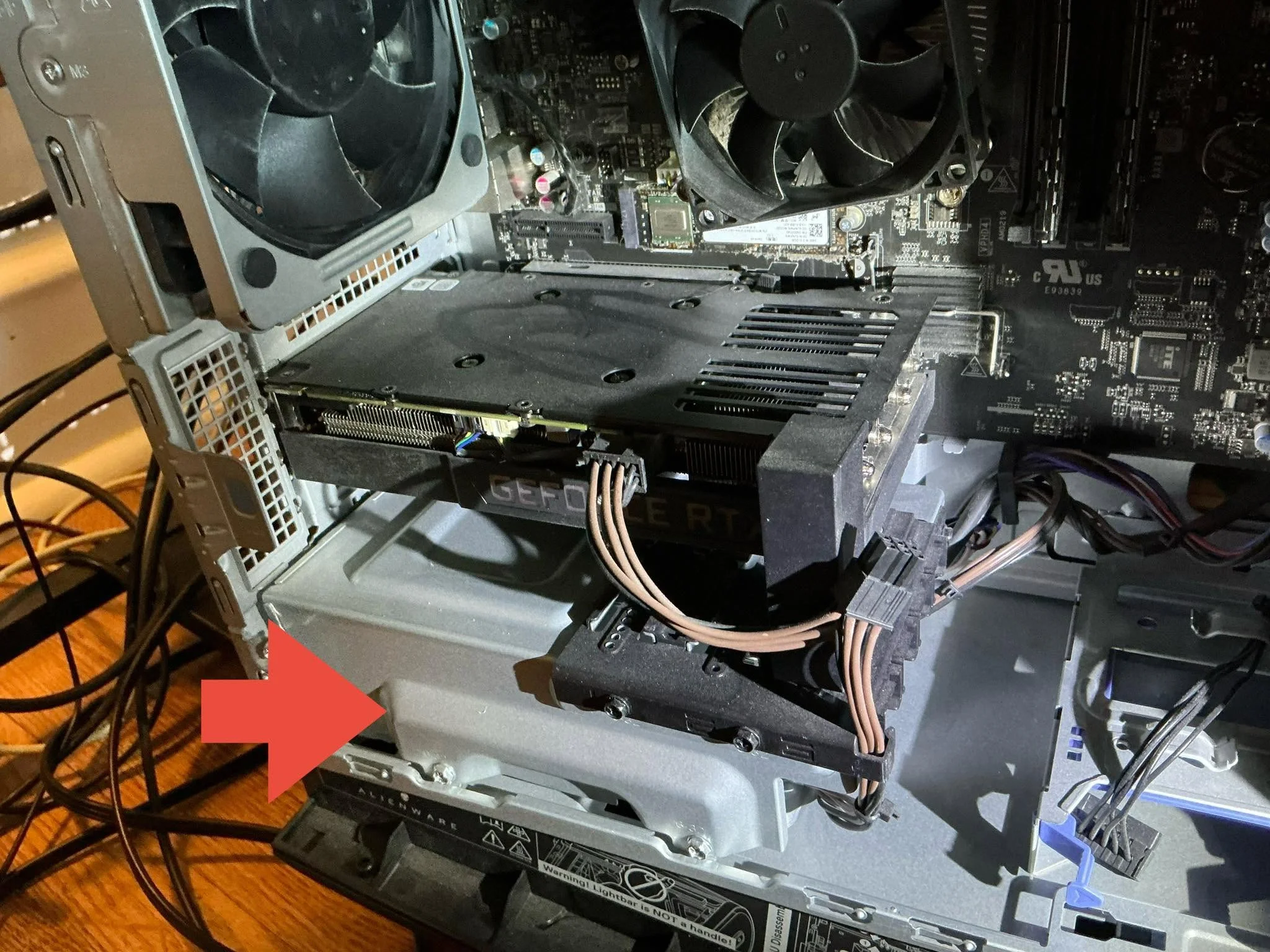
- Power off, unplug, and reseat the card in its PCIe slot. Re-plug the power connectors too, since a card with no power can appear in Device Manager but not in Task Manager.
- As a last resort, update the motherboard BIOS.
If the card is heavy and drooping, it can work loose over time, so it’s also worth checking whether GPU sag has left it partly unseated. And if you reseat it and the fans do nothing, see when GPU fans should be spinning before assuming the card has failed.
Related reading: a GPU not being detected how to upgrade a GPU.
Frequently Asked Questions
Why is my GPU not showing in Task Manager on Windows 11?
Most often a missing or outdated driver, or a monitor connected to the motherboard. Update the driver and check where the display cable is plugged in.
Why does Task Manager show 0% GPU usage?
The counters may be corrupted, or the app isn’t using the dedicated GPU. Rebuilding the counters with lodctr /R and setting Power mode to Best Performance often fixes it.
Does the GPU show up in the BIOS?
A dedicated GPU should be detected at startup. If it doesn’t appear, check that the PCIe slot is enabled, and reseat the card and its power cables.
Is the GPU column missing or the whole GPU tab?
If only the column is missing, right-click a header on the Processes tab and tick GPU. If the whole tab is missing, check your Windows version and update the graphics driver.