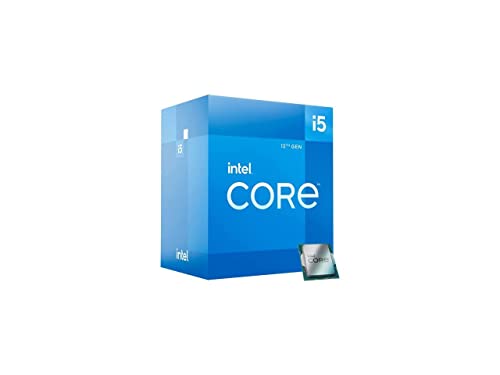

If you’re building or upgrading a PC and eyeing 9th generation Intel chips, you’ve got some proven options that still hold their own in gaming and everyday workloads. Whether you need a budget-friendly processor or something with extra cores for multitasking, the 9th gen lineup includes models that balance performance and cost effectively for mid-range builds.
Recommended by Us

Intel Core i7-9700 3.0GHz 8-Core CPU
- Eight cores provide genuine multithreading advantage for parallel workloads and productivity software
- Renewed pricing makes this an excellent value for budget builds or platform upgrades
- Mature architecture with widespread compatibility and optimization across modern software
- Solid foundation for 1440p gaming paired with contemporary graphics cards
- No hyperthreading on i7-9700 (eight cores, eight threads rather than sixteen), limiting some parallel workload potential compared to newer generations
- Third-party socket and TDP information not provided in the listing, requiring external research before purchase
- Renewed product means no manufacturer testing or validation data included

Intel Core i7-9700F 8-Core Processor
- Low 65W TDP reduces electricity use and cooling requirements
- Eight-core count handles multithreaded workloads efficiently
- Proven 9th-generation Skylake platform with broad software support
- Budget-friendly entry point into multi-core desktop computing
- Requires a discrete graphics card; cannot display video without one
- BIOS update may be necessary on some Intel 300-series motherboards for compatibility
- Older architecture means fewer efficiency gains compared to newer generations
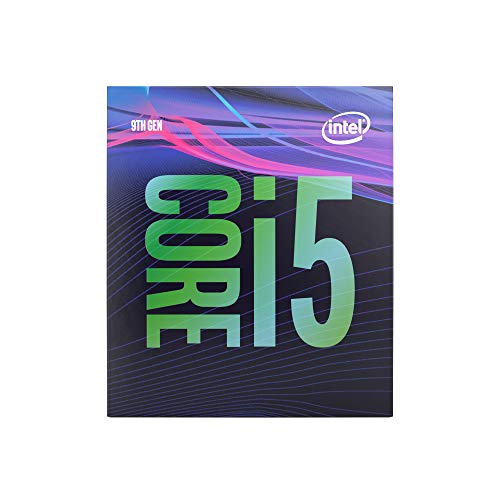
Intel Core i5-9500 6-Core Desktop CPU
- Low 65W power envelope reduces electricity costs and thermal load on budget coolers
- Straightforward LGA1151 platform with affordable motherboard options in the 300-series range
- Adequate core count for daily multitasking, web browsing, and office productivity
- Boost speeds to 4.4 GHz keep response times snappy for interactive work
- Only six threads limits performance in heavily parallelized professional workloads like video editing or 3D rendering
- BIOS update may be required on some 300-series boards, adding an extra setup step for first-time builders
- No integrated graphics specified in the listing; a discrete GPU is likely necessary for any gaming or graphics-heavy use

Intel® Core™ Ultra 9 Processor 285K 24 cores

Intel Core i9-9900K 8-Core Desktop CPU
- Strong per-core performance with boost speeds up to 5.0 GHz
- 8-core design handles modern multi-threaded workloads efficiently
- Reasonable power consumption at 95W for an enthusiast-class processor
- Unlocked multiplier opens overclocking potential for power users
- Integrated graphics suffices for everyday computing without a dedicated card
- Requires Intel 300-series chipset motherboards; incompatible with older or newer platforms
- No details provided on thermal design or stock cooler; cooling solution must be confirmed separately
- Integrated graphics cannot handle demanding 3D gaming without external GPU support

Intel Core i7-9800X 8-Core Server CPU
- 16 threads enable efficient parallel processing for professional applications
- Turbo boost reaches 4.4GHz for mixed workload balance
- Renewed pricing offers exceptional value for workstation builders
- Enterprise-binned SKU provides reliability pedigree
- CPU-only—you must purchase a compatible cooler separately
- TDP and exact socket type not listed in product information
- 9th generation architecture means it will not work with current-generation motherboards

Intel Core i9-9900K 8-Core Processor
- Excellent core count-to-price ratio for content creation work
- Low 95W TDP keeps thermals and power consumption reasonable
- Unlocked design allows overclocking for performance tuning
- Strong single and multi-threaded performance for its generation
- Requires LGA1151 300-series motherboard, limiting compatibility
- No warranty details provided for renewed unit
Picking the Right 9th Gen Intel CPU for Your Build
For budget-conscious builders, the Intel Core i5-9500 hits a sweet spot with 6 cores and 6 threads running up to 4.4 GHz. It’s plenty for 1080p gaming and everyday multitasking without breaking the bank. If you want more power for streaming, content creation, or heavy workloads, I’d point toward the Intel Core i7-9700F, which doubles down with 8 cores and threads, reaching 4.7 GHz at turbo. The F variant saves money by skipping integrated graphics, perfect if you’re pairing it with a dedicated GPU anyway. For enthusiasts willing to spend more, the Intel Core i9-9900K is the flagship with 8 cores, 16 threads, and unlocked multipliers that let you overclock. All are compatible with Intel 300 Series chipset motherboards, though you may need a BIOS update depending on your board. Check our guide on how GPU and CPU affect gaming performance to decide your upgrade priorities.
FAQs
1. What socket do 9th gen Intel CPUs use?
All 9th generation Intel desktop processors use the LGA1151 socket and require Intel 300 Series chipset motherboards. Most newer boards in this category support 9th gen out of the box, but some older stock may need a BIOS update before the CPU will work.
2. Do all 9th gen Intel CPUs have integrated graphics?
Most do, but the F-series models like the i7-9700F don’t include integrated graphics. If you’re buying an F-series chip, you’ll need a dedicated graphics card. Non-F versions include Intel UHD Graphics, adequate for light gaming and office work without a GPU.
3. What’s the difference between the i7-9700 and i7-9700F?
Both have 8 cores and 8 threads, but the i7-9700F removes integrated graphics to lower the cost. If you already have or plan to buy a dedicated GPU, the F variant offers better value. The standard version suits builders who want graphics flexibility built in.
4. Are 9th gen Intel CPUs still worth buying?
Yes, especially at lower prices on the used or refurbished market. They remain capable for 1080p and 1440p gaming, video editing, and multitasking. For newest AAA games at high settings or professional production work, newer generations offer better efficiency and features like improved display compatibility, but 9th gen remains solid for mid-range builds.
5. How much power do 9th gen Intel CPUs draw?
Most 9th gen chips have a TDP of 65W or 95W. The i5-9500 and i7-9700F are 65W, making them efficient and easy to cool. The K-series chips like the i9-9900K run 95W, so they benefit from a quality cooler if you plan to overclock or push performance.
Editor’s Verdict
The best 9th gen Intel CPUs for most builders are the i5-9500 if you’re budget-limited, or the i7-9700F if you want more muscle without the graphics overhead. Both deliver solid, reliable performance at a fair price point today.