
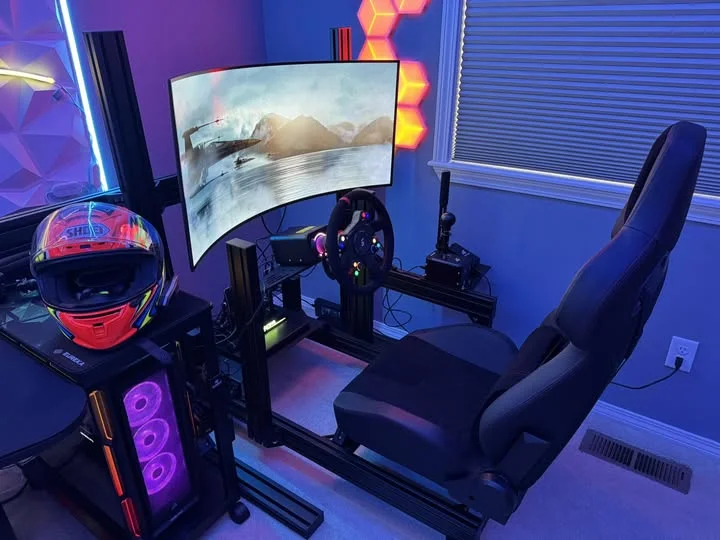
Sim racing has a reputation for being an expensive hobby, largely because the setups that get shared online tend to be the flashiest ones. The reality for anyone starting out on a tight budget looks a lot more modest, and a lot more achievable, than the YouTube thumbnails suggest.
- A usable setup can be built for well under $350 using the second-hand market.
- Pedals and mounting stability matter more early on than the wheel itself.
- Skipping unnecessary extras keeps a first build focused on what actually affects lap times.
- A budget build can be upgraded piece by piece rather than replaced entirely later.
The Cheapest Realistic Starting Point
The used market makes a real difference here. A secondhand belt or gear-driven wheel with pedals included, clamped to a desk, can get someone racing for $250 to $350 total, according to OC Racing’s guide to building a sim racing setup for cheap. This isn’t a compromise setup either, it’s genuinely enough hardware to learn the fundamentals of racecraft.
- A used Logitech G923 or Thrustmaster T248, complete with pedals, covers the core hardware need in one purchase.
- A simple desk clamp avoids the cost of a stand or cockpit entirely for a first build.
- Whatever PC or console already exists at home is usually enough to run entry-level and mid-tier sim titles without an upgrade.
What to Skip on a Tight Budget

- A dedicated cockpit isn’t necessary yet. A budget rig sitting in a small apartment often goes unused compared to a simple stand or desk clamp that’s quick to set up.
- Triple monitors or VR add cost to both the display and the PC needed to drive them, and neither is required to start learning.
- Aftermarket wheel rims and accessories are easy upgrades to get distracted by before the core setup is even dialed in.
The First Upgrade Worth Saving For
Once a basic setup is running, a load cell brake pedal tends to be the single upgrade that improves consistency the most, more so than jumping straight to a nicer wheel. Braking is where a lot of lap time gets made or lost, and potentiometer pedals make that harder to control precisely.
FAQ
1. Can I start sim racing with a controller instead of a wheel?
Yes, plenty of drivers start on a controller to learn racecraft fundamentals before investing in a wheel at all.
2. Is buying used sim racing gear risky?
It carries some risk, but wheel and pedal hardware tends to be fairly durable, and buying from established marketplaces or sim racing community groups lowers the risk further.
3. What’s the single best upgrade on a tight follow-up budget?
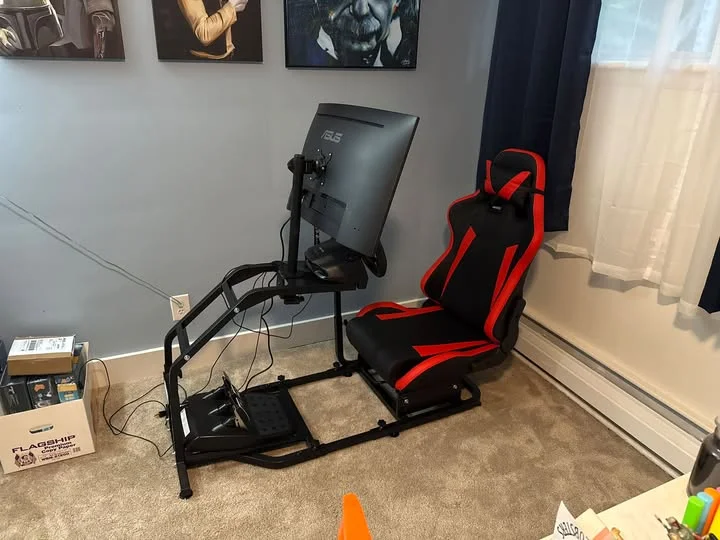
A load cell brake pedal upgrade tends to deliver more consistency improvement per dollar than any other single purchase at this stage.
Final Take
A budget build isn’t a lesser version of the hobby, it’s how most sim racers actually get started. The expensive setups people see online are almost always the result of years of piecemeal upgrades, not a single big purchase.
This guide reflects general buying guidance based on current sim racing hardware trends. Pricing and specific model availability change frequently, so always check current listings before buying.