
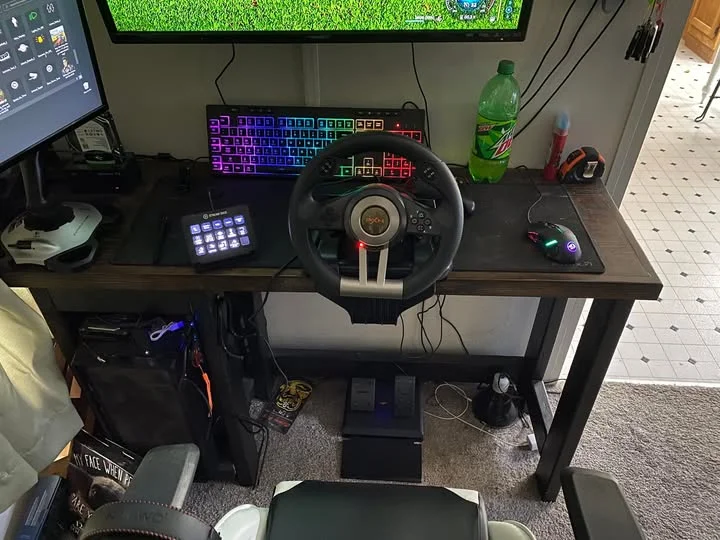
Not everyone has room for a cockpit, and plenty of direct drive owners run their entire setup off a desk. It works, but it takes more care than clamping a belt-driven wheel down ever did, since the torque involved can expose weaknesses in a desk that were never a problem before.
- A dedicated desk clamp built for direct drive torque is the safest mounting option.
- A DIY board-and-clamp setup can work if the desk itself is genuinely solid.
- Desk flex, not the clamp, is usually what limits performance in desk-mounted setups.
The Purpose-Built Option
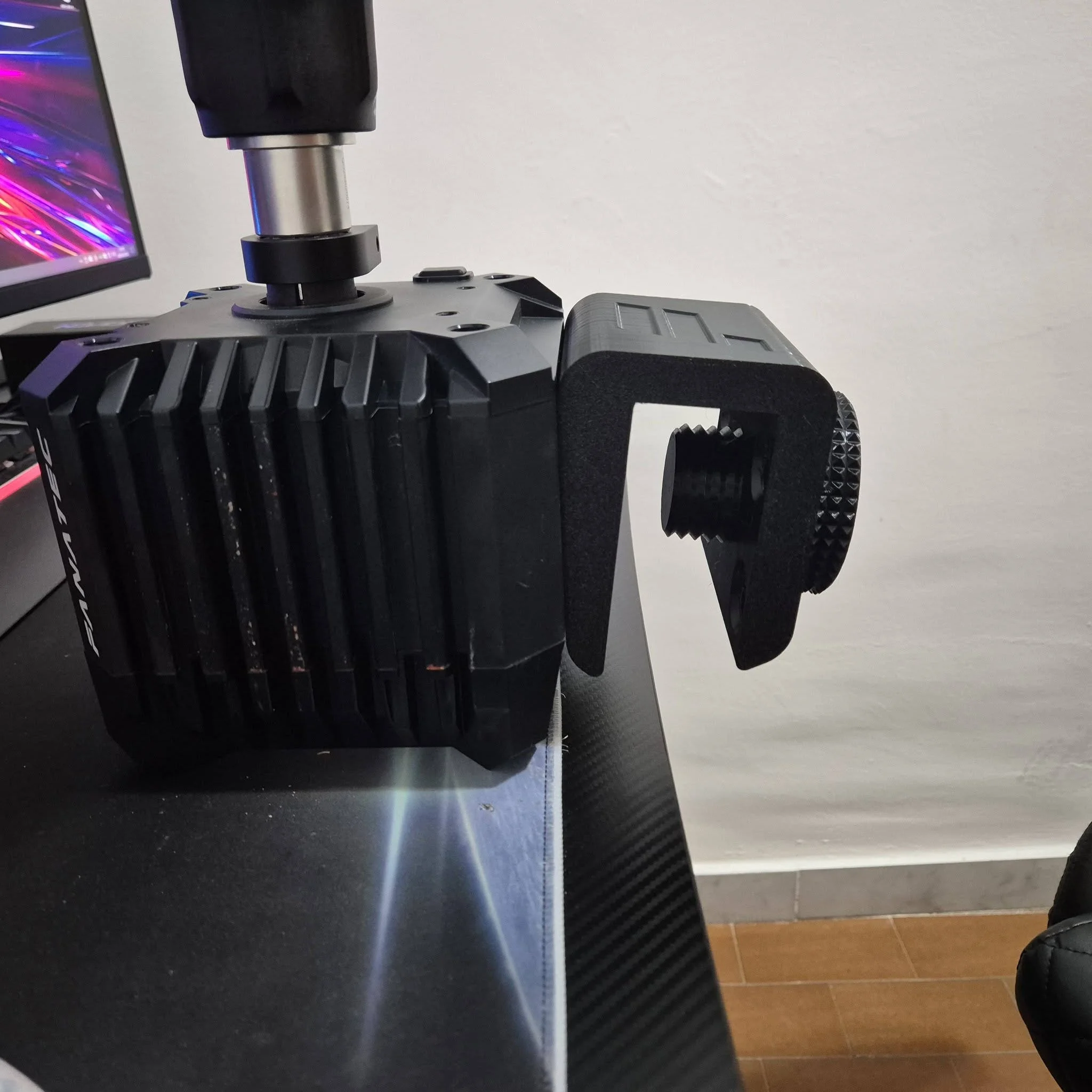
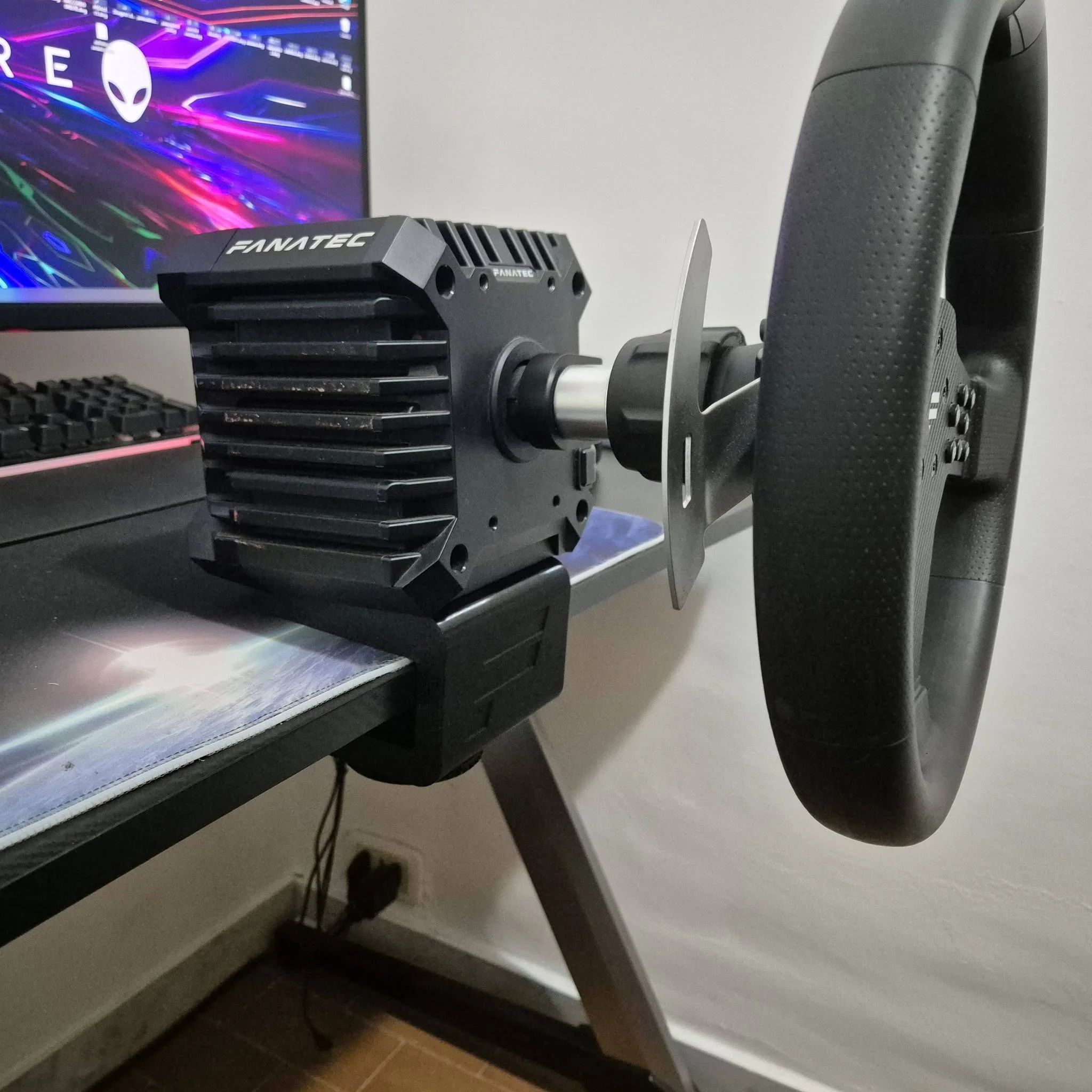
Several wheelbase manufacturers sell dedicated table clamps engineered specifically for direct drive torque. According to Fanatec’s guide to desk-mounting a wheel base, these clamps use heavier metal construction than a standard wheel clamp to handle the force without slipping or flexing.
- Compatibility varies by base, so it’s worth checking a specific clamp against the exact wheelbase model before buying.
- Higher torque bases benefit the most from a purpose-built clamp, since a generic clamp is more likely to slip or mark the desk under strong force feedback.
The DIY Approach

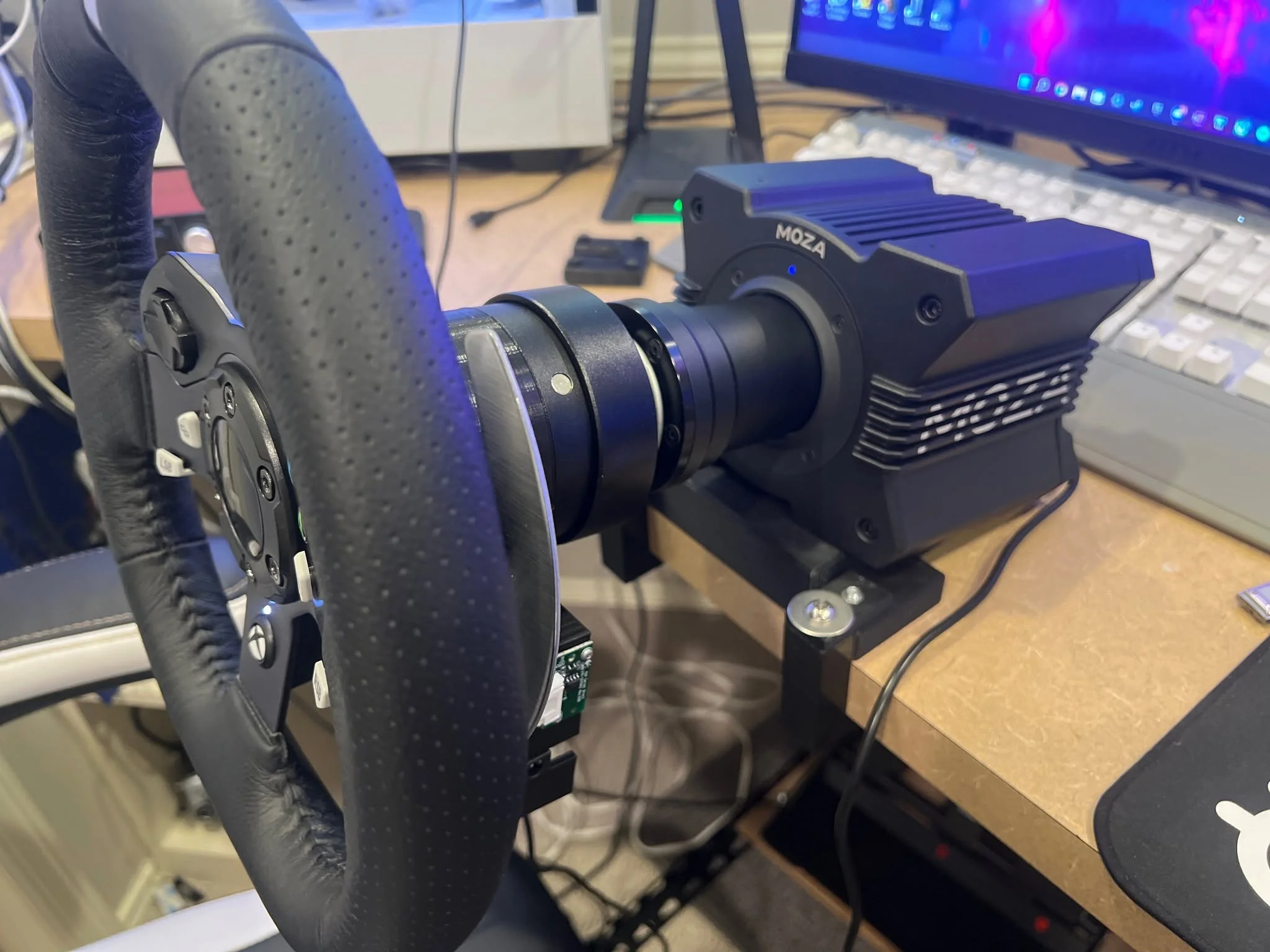
A common community workaround involves attaching a rigid board to the desk with clamps, then mounting the wheelbase to that board rather than the desk surface directly. This spreads the load across a wider area and can outperform a single-point clamp on a thinner desk.
- The desk itself needs to already be solid, ideally mounted against a wall or reinforced underneath, before this method is worth trying.
- Diagonal bracing at the rear corners of a desk’s legs tends to reduce flex more effectively than simply adding weight to the desk.
Reality Check: Even a small amount of desk flex under hard force feedback can undo a lot of what a direct drive wheel is actually good at. The clamp rarely fails first, the desk does.
Signs the Desk Isn’t Holding Up
- Visible wobble or shifting during strong cornering forces or curb effects
- The wheel’s position drifting slightly over a long session
- Creaking or flex felt through the desk surface under load
Any of these are a sign it’s time for either a more reinforced desk setup or a dedicated stand.
FAQ
1. Can any desk handle a direct drive wheel?
Not reliably. Thin or unsupported desks tend to flex under torque, especially from mid-range and higher-torque bases.
2. Is a wall-mounted desk better for this?
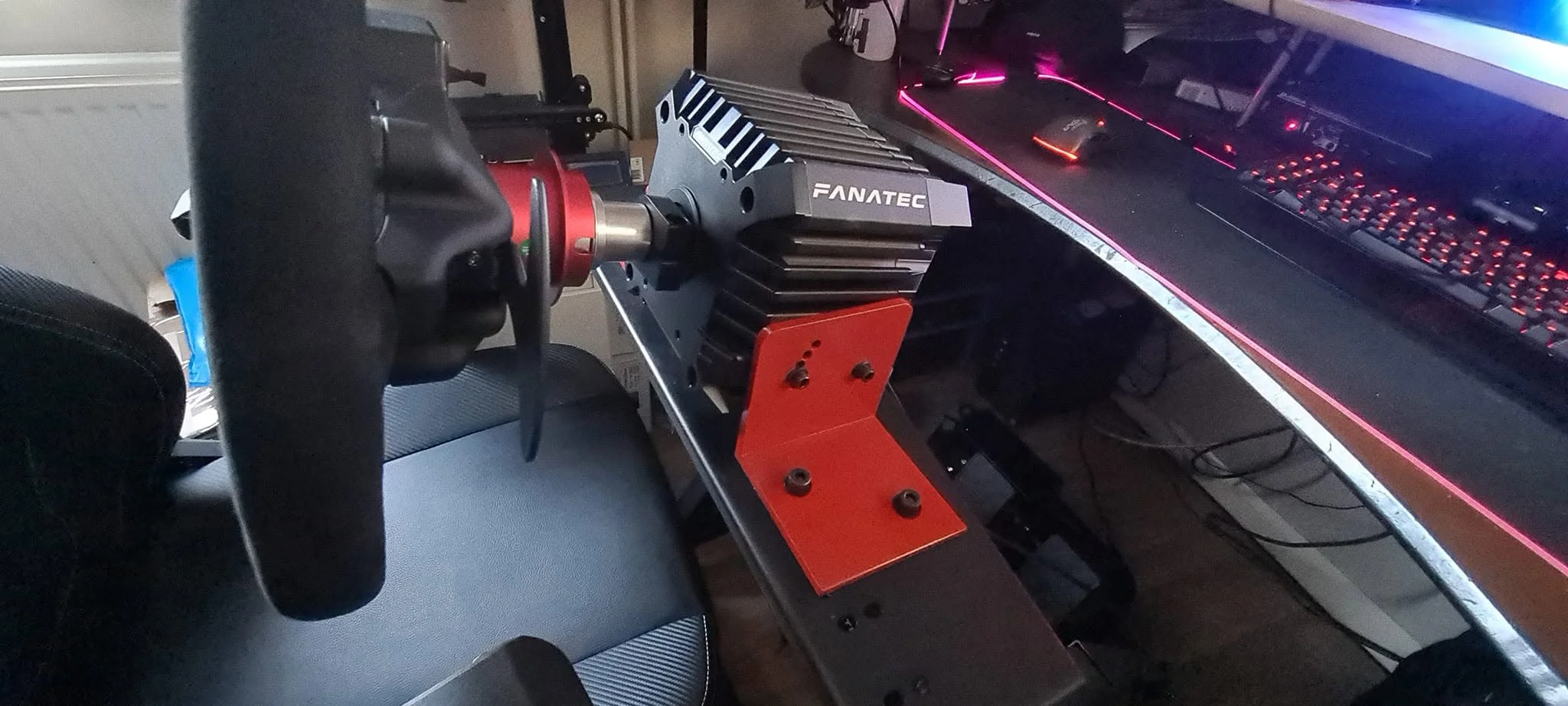
Generally yes, since it removes leg flex as a variable and transfers force into the wall studs instead.
3. When should I switch from a desk to a stand or rig?
Once flex or wobble becomes noticeable during normal driving, or after a wheelbase upgrade to higher torque, it’s usually time to move to dedicated mounting hardware.
Final Take
Desk mounting a direct drive wheel is genuinely viable, plenty of sim racers run this exact setup long-term. The desk’s rigidity, not the wheelbase or the clamp, is almost always the deciding factor in whether it actually works well.
This guide reflects general buying guidance based on current sim racing hardware trends. Pricing and specific model availability change frequently, so always check current listings before buying.