
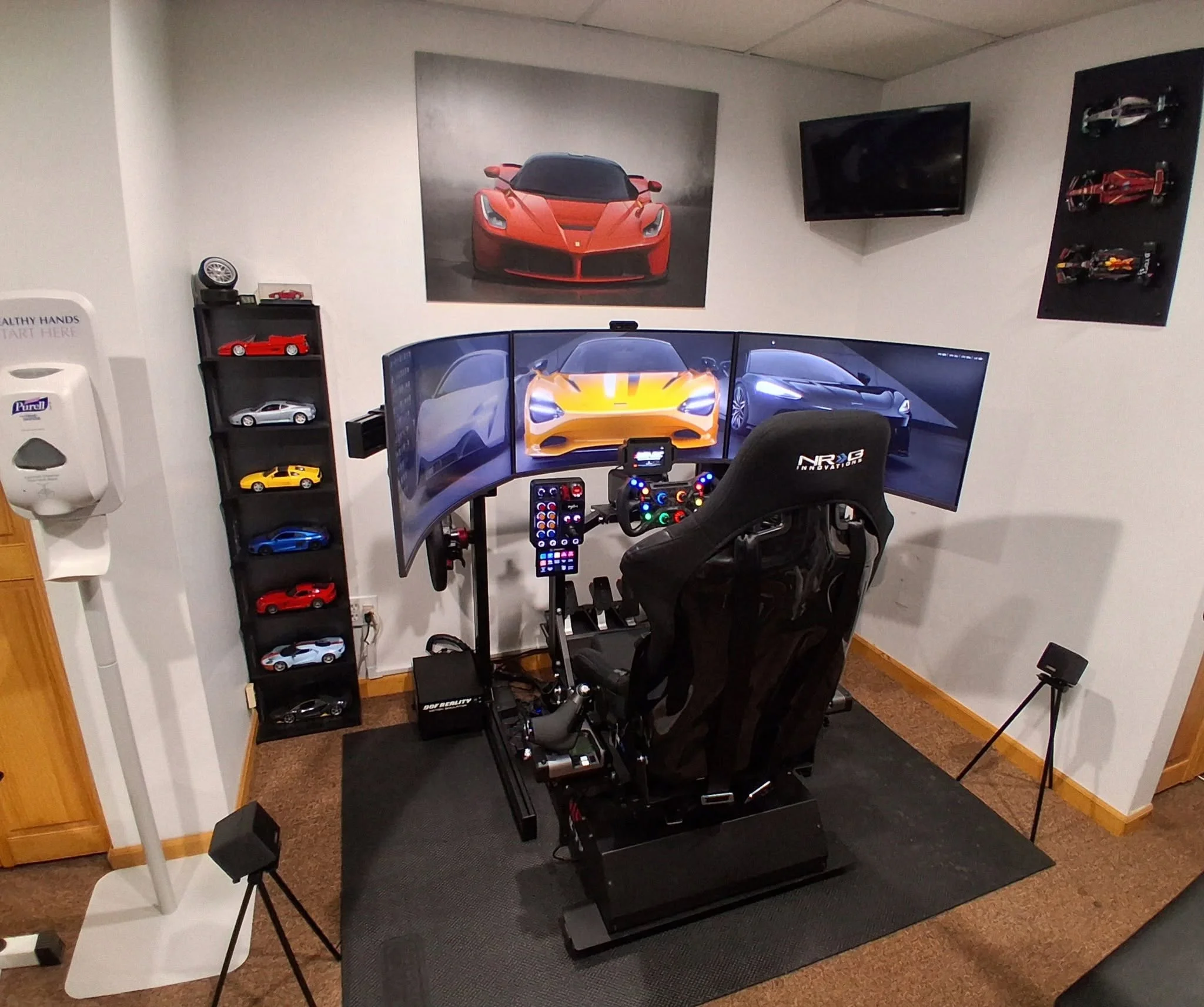
Anyone who’s watched a friend brake late into a corner while gripping a $2,000 wheel setup has probably wondered what actually separates sim racing from just playing a racing game. The line is thinner than it looks, and it mostly comes down to how seriously the physics, hardware, and community treat the idea of realism.
- Sim racing aims to recreate real motorsport physics, not just fast, fun driving.
- It differs from arcade racing through realistic tire grip, damage, and car handling.
- Entry costs can be surprisingly low, since skill matters more than gear at the start.
What Makes It “Sim” Racing
The word “sim” refers to simulation, and the goal is recreating what driving a real race car actually feels like, from tire grip and weight transfer to how a car behaves at the limit, rather than exaggerating handling for fun the way an arcade racer does. This is the core distinction highlighted in Wikipedia’s overview of sim racing as a genre.
- Physics-first design. Cars lose grip, spin, and behave the way real cars do under similar conditions, rather than being tuned for arcade-style forgiveness.
- Real tracks and cars. Most sim racing titles license real circuits and manufacturers, aiming for layouts and car behavior that mirror their real-world counterparts closely.
- A genuine skill ceiling. Braking points, throttle control, and racecraft carry over conceptually from real motorsport in a way arcade racing rarely attempts.
What You Actually Need to Start


The good news for anyone curious about trying it: skill is the limiting factor at the beginner level, not equipment. It’s entirely possible to start on a standard controller and still learn the fundamentals of racecraft before spending on hardware.
- A budget force feedback wheel, something in the $200 to $300 range, is the most common first upgrade once a controller starts feeling limiting.
- A PC or console capable of running the title smoothly matters more early on than premium peripherals.
- Time behind the wheel tends to matter more than any single hardware purchase for actually getting faster.
Where Beginners Usually Start

Console-friendly titles with strong tutorials, structured rookie series designed for newcomers, and dedicated GT-focused simulators are all common entry points, each teaching slightly different fundamentals before a driver settles into a preferred style of racing.
FAQ
1. Do I need expensive gear to try sim racing?
No. A controller or a budget wheel is enough to learn the basics. Hardware becomes more important once a driver starts chasing competitive lap times.
2. Is sim racing the same as esports racing?
They overlap. Esports racing usually refers to organized competitive leagues within sim racing titles, while sim racing itself is the broader hobby.
3. Which sim racing game should a beginner start with?
A console-friendly title with strong tutorials is often the easiest entry point, with more hardcore simulators making more sense once the basics feel comfortable.
Final Take
Sim racing rewards patience with the fundamentals before it rewards spending on hardware. Most of what makes it addictive, the feeling of actually improving lap by lap, has very little to do with how expensive the setup is.
This guide reflects general buying guidance based on current sim racing hardware trends. Pricing and specific model availability change frequently, so always check current listings before buying.