

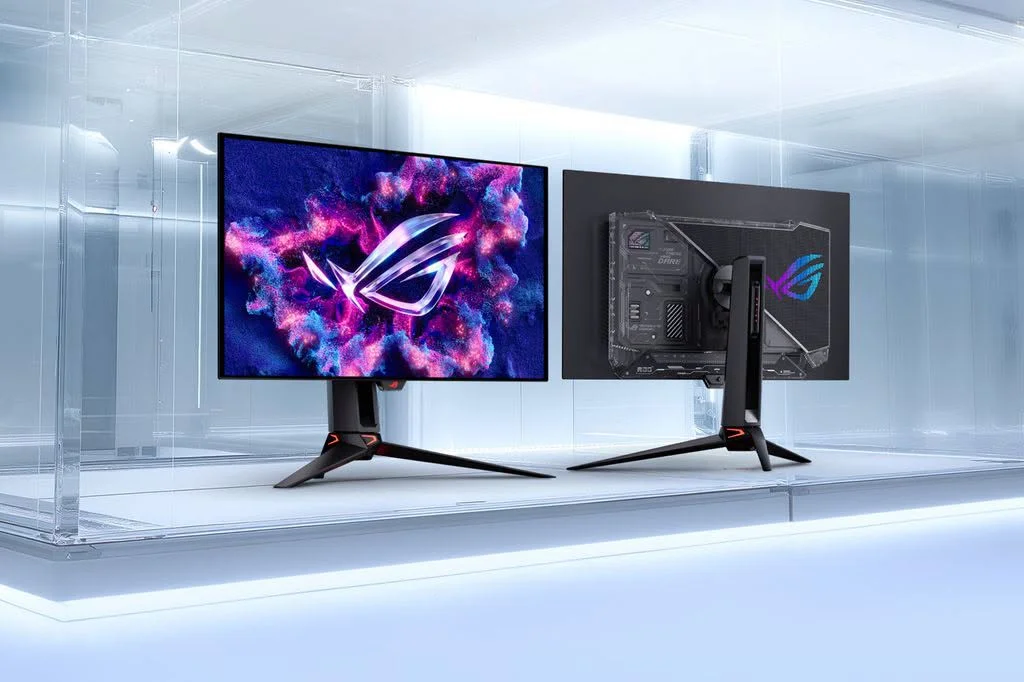
Gaming monitors that promise both high refresh rate and 4K resolution usually force a compromise somewhere. The ASUS ROG Swift PG27UCWM is one of the first OLED panels to genuinely push both at once. This review covers the panel technology, the dual refresh mode ASUS built in, and whether the price tag is justified.
Quick verdict: The PG27UCWM pairs a 26.5-inch Tandem RGB OLED panel with 4K resolution at 240Hz, or FHD at 480Hz in its alternate mode. It’s backed by a 0.03ms response time and VESA DisplayHDR True Black 400 certification. Priced in the $1,100 to $1,200 range, it sits in flagship territory, and the spec sheet backs that pricing up on paper.
At a Glance: ASUS ROG Swift PG27UCWM Specs
- Panel: 26.5″ Tandem RGB OLED, TrueBlack Glossy coating
- Resolution: 3840 x 2160 (4K), 16:9
- Refresh rate: 4K at 240Hz, or FHD at 480Hz (dual mode)
- Response time: 0.03ms gray-to-gray
- Color: 99% DCI-P3, Delta E < 2
- Contrast: 1.5M:1
- HDR: VESA DisplayHDR True Black 400
- Connectivity: DisplayPort 2.1a UHBR20 (80Gbps), 2x HDMI 2.1 (48Gbps), USB-C with 90W PD, USB hub
- Extras: Neo Proximity Sensor, ASUS OLED Care Pro, GaNFET thermal management
- Price: Around $1,100-$1,200 MSRP
- Warranty: 3 years
Who Is the PG27UCWM Actually For?

This monitor targets a specific buyer profile:
- Someone with a flagship GPU capable of pushing real frame rates at 4K
- Buyers who also want the option to drop to FHD at 480Hz for competitive titles
- Anyone treating one monitor as both a 4K showcase display and a high-refresh esports panel
Casual gamers on a mid-range GPU are unlikely to see the full benefit here. A 1440p high refresh monitor would deliver better value for that budget.
Panel Technology: What Tandem RGB OLED Changes
The headline feature is the Tandem RGB OLED panel. ASUS says it delivers 27% larger color volume compared to the previous generation of WOLED panels. In practical terms, that should mean:
- Noticeably richer, more saturated colors in HDR content
- Better performance in games that support wide color gamuts
- The contrast and black levels OLED panels are already known for
The 0.03ms response time is essentially instant by any practical measure. Combined with the dual refresh rate modes, this panel is built to serve both high-fidelity 4K gaming and ultra-competitive FHD play without needing two separate monitors.
HDR and Burn-In Protection
VESA DisplayHDR True Black 400 certification puts this panel in a strong tier for HDR gaming and content. It leans on OLED’s per-pixel lighting control rather than a backlight-based HDR implementation.
ASUS also built in burn-in protection:
- A Neo Proximity Sensor
- The OLED Care Pro software suite
Burn-in remains the main long-term concern with any OLED gaming monitor that might display static UI elements for long stretches.
Connectivity and Build
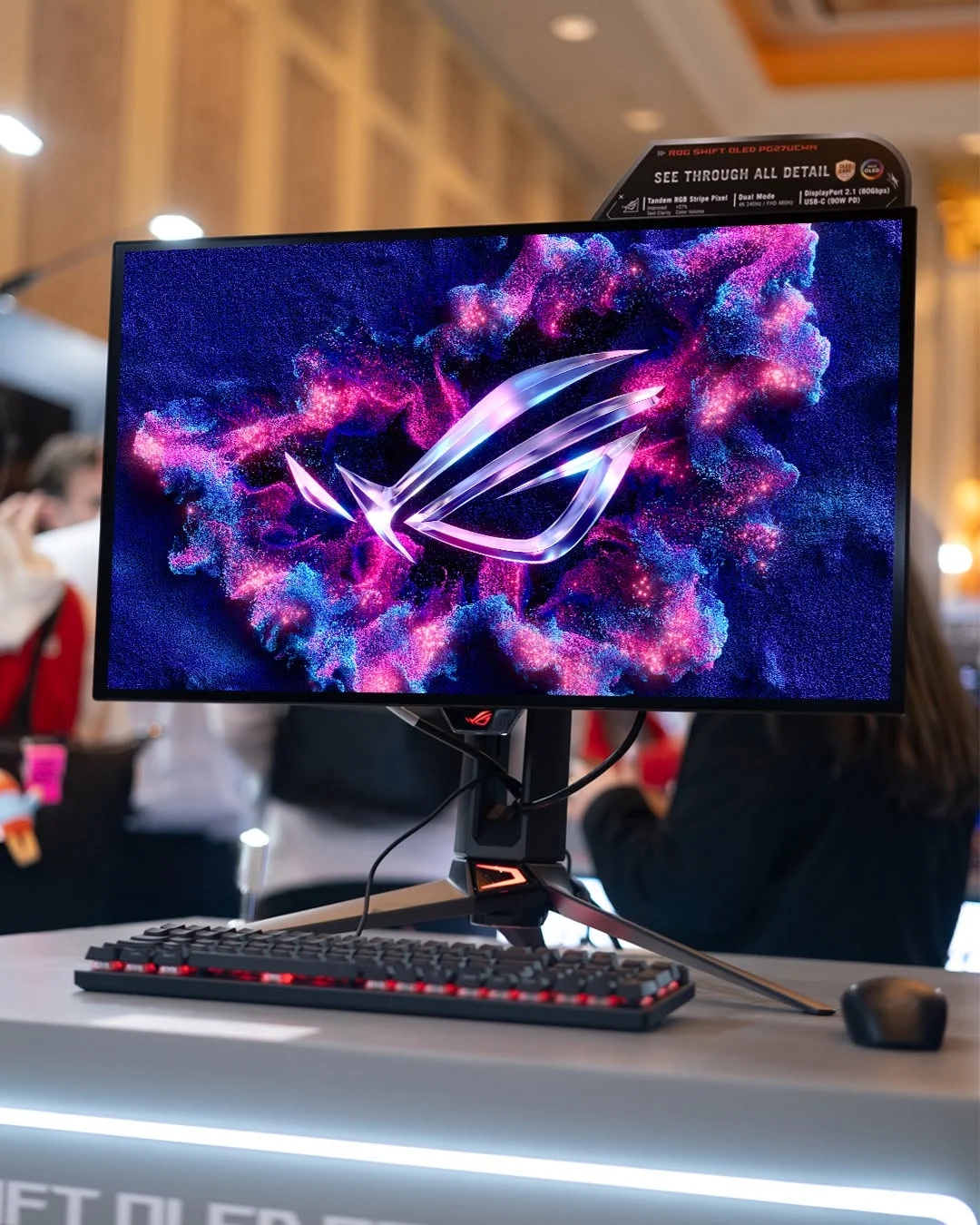
The port selection here is genuinely future-proof:
- DisplayPort 2.1a supporting UHBR20 bandwidth at 80Gbps
- Two HDMI 2.1 ports at 48Gbps each
- USB-C with 90W power delivery, enough to charge a laptop through the same cable carrying video
The stand supports full height, tilt, swivel, and pivot adjustment. GaNFET technology is used for more efficient thermal management inside the chassis.
Pros and Cons
What stands out
- Genuinely dual-purpose panel: 4K at 240Hz or FHD at 480Hz depending on the game
- Tandem RGB OLED brings a meaningful color volume improvement over previous-gen WOLED panels
- Near-instant 0.03ms response time
- Future-proof connectivity, including DisplayPort 2.1a UHBR20 and 90W USB-C power delivery
- Built-in burn-in protection features specifically for OLED longevity
What gives pause
- This only makes sense with a GPU capable of pushing 4K at high frame rates
- OLED burn-in risk, while mitigated, is never fully eliminated with static content over long-term use
- Buyers gaming primarily at 1440p or lower won’t get the full value out of this panel’s strengths
ASUS ROG Swift PG27UCWM vs. the Competition
Against other flagship OLED gaming monitors like the Alienware OLED lineup, the PG27UCWM’s dual refresh rate mode is its clearest differentiator. Most competing panels commit to one resolution and refresh rate combination. Buyers who genuinely use both use cases get real added value here that’s hard to replicate by buying two separate monitors.
FAQ
1. Can the PG27UCWM actually run games at 4K 240Hz?
The panel supports it, but hitting that frame rate consistently at 4K requires a flagship-tier GPU. Without one, the monitor will still look excellent, just not at the full refresh rate in demanding titles.
2. Is OLED burn-in a real concern on this monitor?
It’s a lower risk than early OLED panels thanks to the Neo Proximity Sensor and OLED Care Pro suite. Static content like taskbars or HUD elements left on screen for extended periods can still contribute to it over time.
3. Does this monitor support HDR properly?
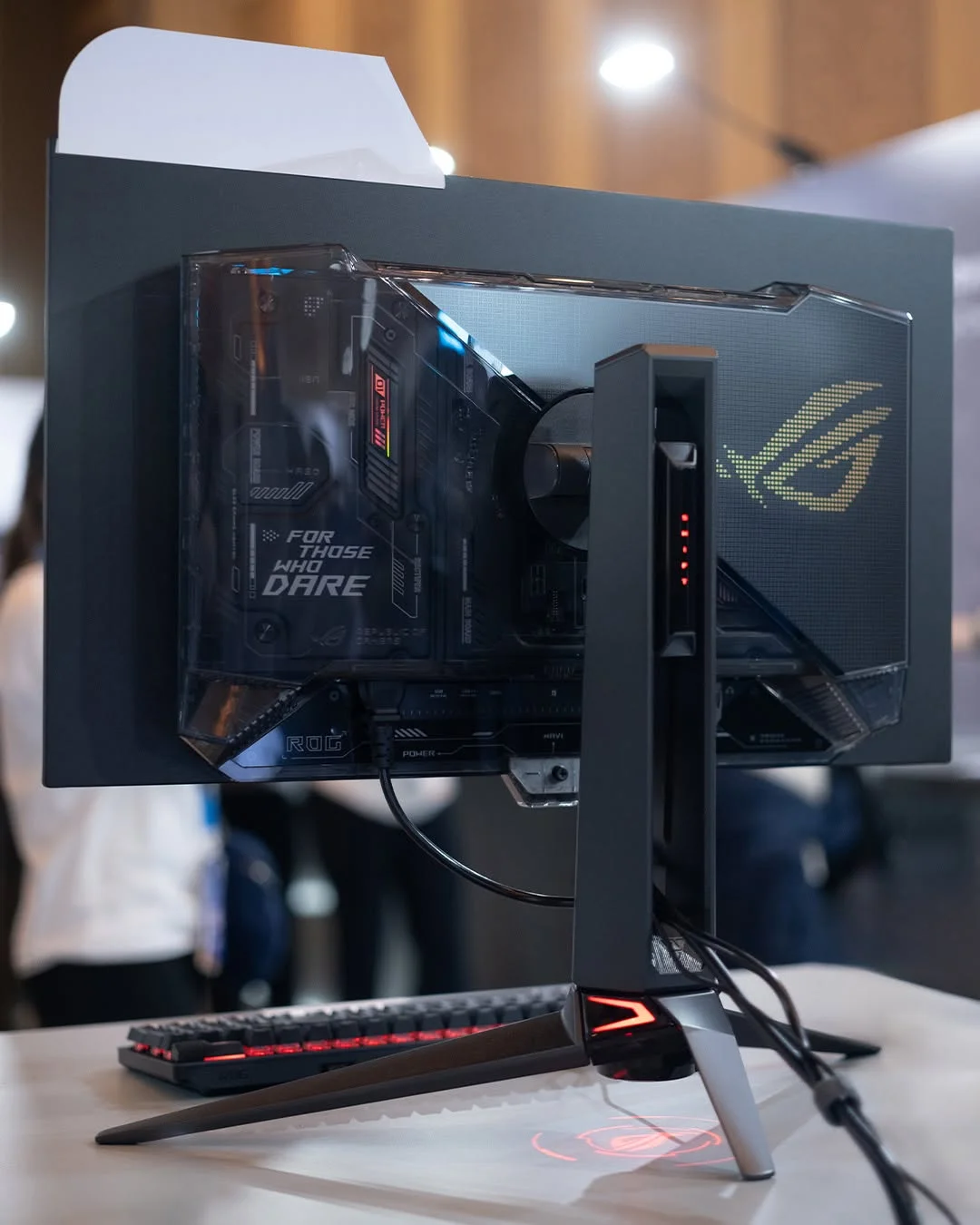
Yes, it carries VESA DisplayHDR True Black 400 certification, using OLED’s per-pixel lighting for genuinely strong HDR performance.
4. Is the 90W USB-C power delivery enough to charge a laptop?
For most ultrabooks and many gaming laptops, yes. Higher-power gaming laptops that need 130W or more for full-speed charging may still need their original charger.
Final Take
The ASUS ROG Swift PG27UCWM earns its flagship price tag by genuinely delivering on two different use cases most competing monitors force buyers to choose between. For anyone with the GPU to back it up, the combination of 4K OLED image quality and a 480Hz FHD fallback mode makes this one of the more versatile high-end gaming monitors available right now.
This review is based on manufacturer-published specifications as of publish date. It will be updated with hands-on testing data as it becomes available.
