
The first time force feedback actually clicks, it’s usually mid-corner, feeling the front tires start to lose grip a split second before the car actually slides. That sensation is the entire point of the technology, and it’s worth understanding what’s happening mechanically to get more out of it.
- FFB uses a wheel’s motor to physically push back against a driver’s hands based on in-game forces.
- It communicates things a screen alone can’t, like tire grip, curb contact, and weight transfer.
- Direct drive wheels reproduce FFB more precisely than belt or gear-driven wheels.
What Force Feedback Actually Does
Force feedback takes data from the racing simulation, things like tire load, road surface, and collision forces, and converts it into physical resistance and motion at the wheel. According to Fanatec’s explainer on force feedback, this is what lets a driver feel the car’s behavior instead of only seeing it on screen.
- Cornering forces push back against the wheel as the simulated tires build up load, giving a sense of how hard the car is being driven through a turn.
- Curb strikes and road texture come through as sharp jolts or rumble, effects that would otherwise be invisible without sound or camera shake alone.
- Grip loss often shows up as the wheel going lighter, a subtle cue that experienced drivers learn to react to before a slide fully develops.
Why Refresh Rate Matters
FFB quality isn’t just about how strong a wheel can push. How often it updates that force matters just as much. A wheel with a low refresh rate can feel like it’s a half-step behind what’s actually happening in the simulation, while a high refresh rate keeps the feedback feeling connected in real time.
- Entry and mid-range wheels typically update in the low hundreds of Hz, which is enough for most drivers to feel the core effects clearly.
- High-end direct drive bases can push refresh rates to 1000 Hz or beyond, smoothing out fast, subtle effects that lower refresh rates can blur together.
Worth Knowing: A higher refresh rate mostly sharpens detail rather than adding new sensations entirely. A well-tuned mid-range wheel can still communicate the basics of grip and weight transfer clearly, just with slightly less texture than a flagship base.
Why Direct Drive Reproduces FFB Better

This is where hardware architecture and force feedback quality connect directly. A belt or gear system introduces a small amount of mechanical play between the motor and the wheel, which softens fast, detailed effects before they reach the driver’s hands. For a deeper look at how that connection works, see our guide on what a direct drive wheel actually is.
Getting More Out of FFB Without New Hardware
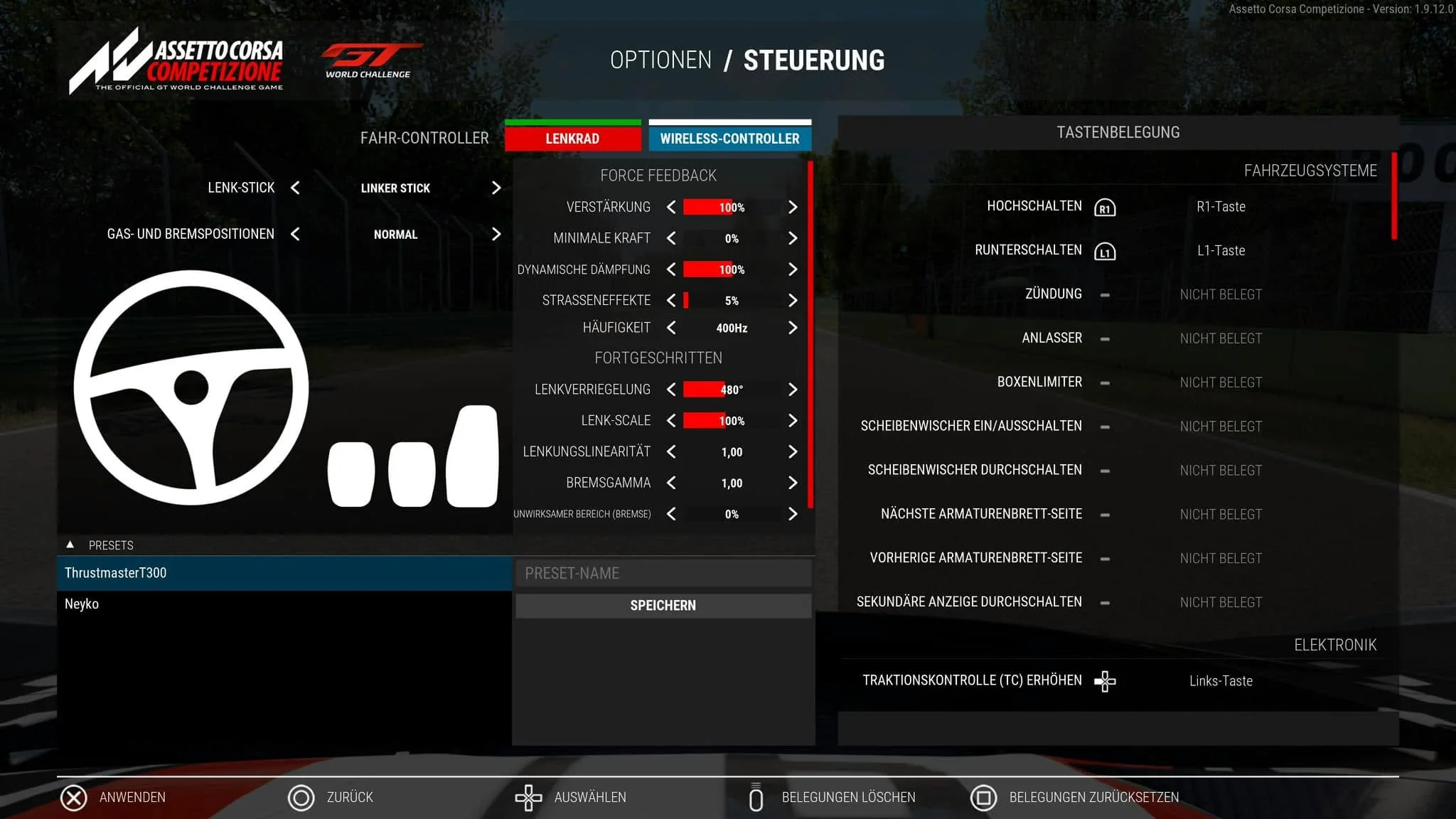
- In-game FFB settings matter as much as hardware. Most sims let drivers adjust overall strength, clipping behavior, and individual effect intensities separately.
- Clipping is a common beginner mistake. Running overall strength too high can clip the signal, making subtle effects disappear even on an expensive wheel.
- Every simulation feels different by default. Comparing FFB between two titles without adjusting settings first isn’t a fair comparison of the hardware itself.
FAQ
1. Why does my wheel feel weak even at max strength?
This is often signal clipping, where an FFB setting somewhere in the chain, either in the sim or the wheel driver software, is capping the output before it reaches the wheel.
2. Do console wheels have real force feedback?
Most console-compatible wheels support genuine force feedback, though torque output and refresh rates are typically lower than PC-focused direct drive bases.
3. Is stronger force feedback always better?
Not necessarily. Running FFB too strong can mask subtle details and fatigue the arms faster, and many experienced drivers run lower strength settings than beginners expect.
4. Can force feedback settings improve lap times?
Indirectly, yes. Cleaner, well-tuned feedback makes it easier to sense the limit of grip, which can translate into more confident and consistent driving.
Final Take
Force feedback is the layer of a sim racing setup that turns a game into something that feels physically real. Hardware sets the ceiling for how good it can get, but software tuning is what most drivers are leaving on the table without realizing it.
This guide reflects general buying guidance based on current sim racing hardware trends. Pricing and specific model availability change frequently, so always check current listings before buying.