
Nvidia and AMD design most consumer GPUs, with Intel a newer third player through Arc. But none of them manufacture the chips. TSMC’s foundries in Taiwan fabricate them, and add-in board partners like Asus, MSI, and Gigabyte turn the bare chip into the finished graphics card you buy in a store.
- Nvidia and AMD design GPUs but don’t manufacture them.
- TSMC fabricates most of the actual chips.
- AIB partners like Asus and MSI build the finished card.
- That’s why the same GPU looks different by brand.
Who Designs GPUs?
Three companies design the GPU chips that end up in consumer graphics cards: Nvidia, AMD, and Intel. Nvidia and AMD have dominated this space for decades, while Intel entered more recently with its Arc series. For how the term GPU itself came about, see who invented the GPU.
Designing a GPU means creating the architecture: how the cores are laid out, how memory is accessed, what features like ray tracing or AI upscaling get built in. It’s an enormously expensive process, but it doesn’t require owning a single factory. For more on what that design work actually produces, see how a GPU works under the hood.
Who Actually Manufactures the Chips?
This is the part most people get wrong. Nvidia and AMD are what’s called “fabless” companies: they design chips but pay someone else to physically build them. That someone else is almost always TSMC (Taiwan Semiconductor Manufacturing Company), which fabricates the vast majority of modern GPU chips.
Samsung and SK Hynix, both based in South Korea, handle some specialized components and memory production alongside TSMC. This concentration of chip fabrication in Taiwan and South Korea is a big part of why global chip shortages hit the GPU market so hard in recent years. For the full step-by-step process, see how GPUs are made.
Who Builds the Finished Graphics Card?
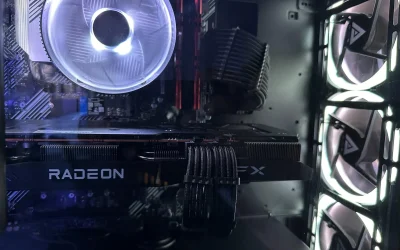
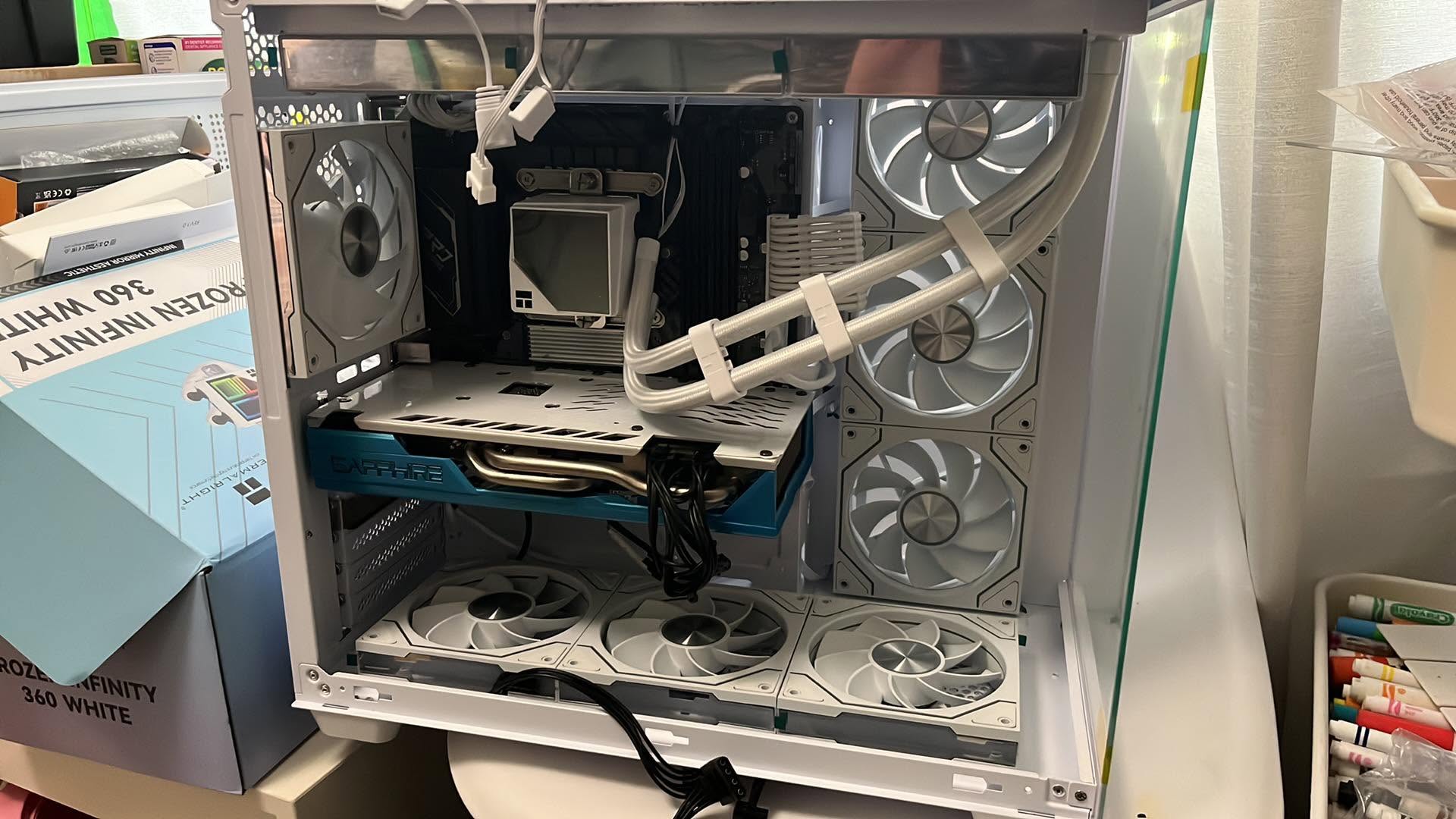
Once TSMC finishes fabricating the wafers, they’re tested and sliced into individual chips, then shipped out to add-in board (AIB) partners. Companies like Asus, MSI, Gigabyte, and EVGA take that bare chip and build everything around it: the circuit board, VRAM, power delivery, and cooling system.
This is why you can buy the “same” GPU, say an RTX 5070, from five different brands at five different prices. The chip inside is identical, but each AIB partner designs its own cooler, PCB layout, and clock speeds around it. That’s also why you can technically buy a “GPU” and a “graphics card” and mean two slightly different things, even though most people use the terms interchangeably.
Is GPU Manufacturing Moving to the US?
Partly, yes. The CHIPS and Science Act has pushed significant federal funding toward new fabrication plants in Arizona, Ohio, and Texas, aimed at reducing dependence on TSMC’s facilities overseas. TSMC opened a plant in Phoenix, Arizona, and Nvidia has started shifting some chip production there.
This shift is still early. The vast majority of GPU chips are still fabricated in Taiwan, and that’s not likely to change dramatically for years. Once you’ve got the finished card in your PC, it’s worth knowing how to check exactly which model you ended up with.
Frequently Asked Questions
Does Nvidia manufacture its own GPUs?
No. Nvidia designs the chip architecture but outsources the actual manufacturing to TSMC, along with Samsung and SK Hynix for some components.
What company makes AMD GPUs?
AMD designs its own GPU architecture, the same way Nvidia does, but also relies on TSMC to fabricate the physical chips.
Why do Asus and MSI both sell the same GPU?
Because both companies are add-in board partners buying the identical chip from Nvidia or AMD, then building their own version of the card around it with different coolers and PCB designs.
Are any GPUs made entirely in the US?
Not yet at scale. TSMC has opened a chip fabrication plant in Arizona, and Nvidia has begun using it for some production, but the majority of GPU manufacturing still happens in Taiwan.