

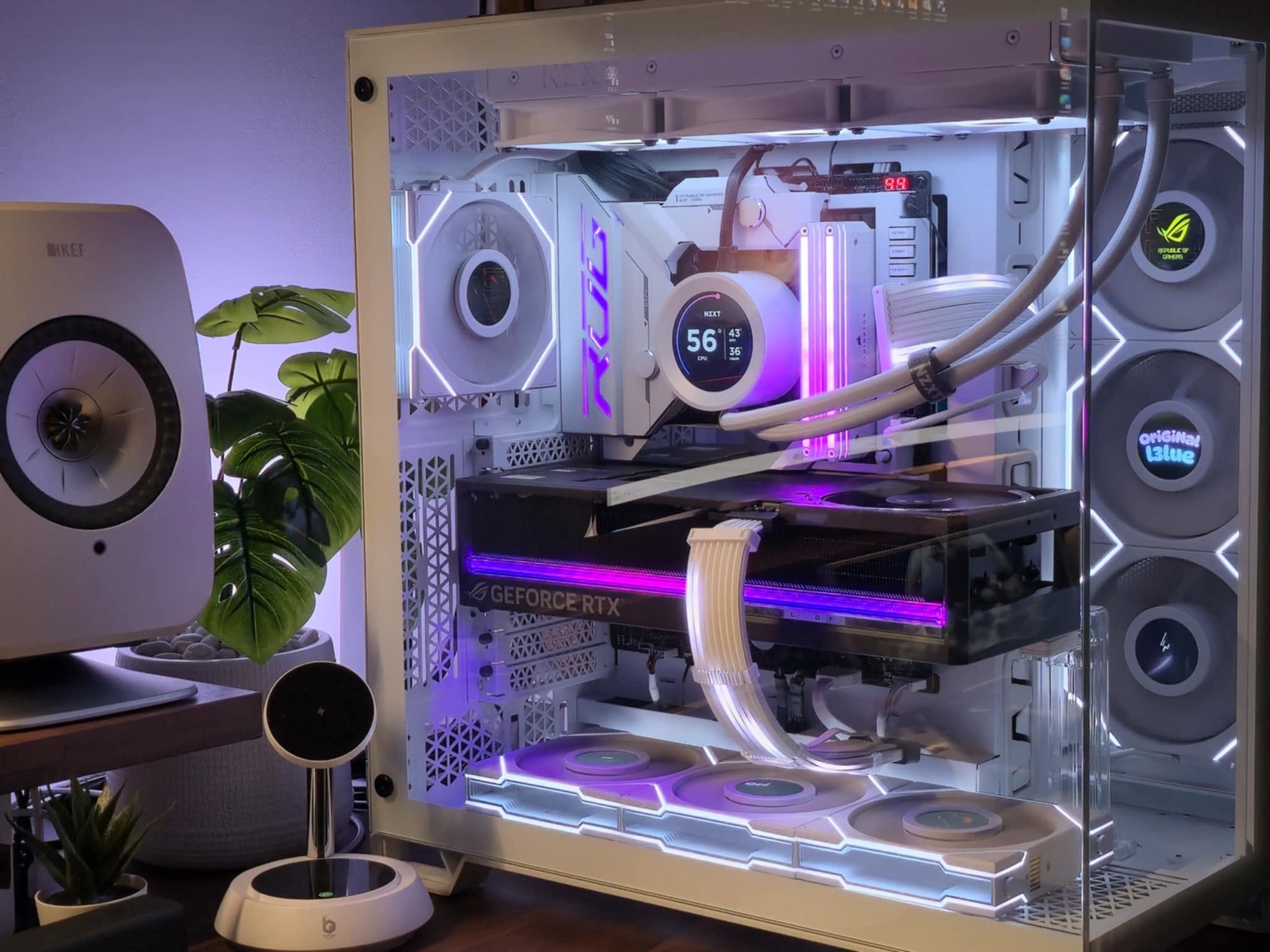
A GPU splits a task into thousands of tiny pieces and processes them at the same time, instead of one after another like a CPU. Rendering an image means calculating millions of pixels, and since each pixel can be worked out independently, thousands of small cores can handle them simultaneously.
- A CPU handles tasks sequentially. A GPU handles thousands of tasks in parallel.
- GPUs are built from thousands of small cores grouped into clusters called streaming multiprocessors.
- This parallel design is why GPUs render graphics fast but aren’t good at general-purpose sequential tasks.
Why Parallel Processing Matters for Graphics
Every frame you see on screen is made of millions of pixels, and each one needs its color calculated based on lighting, textures, and geometry. A CPU could technically do this math too, but it would work through those millions of calculations largely one at a time.
Bottom line: a GPU can assign each pixel calculation to its own core and run them all simultaneously, which is the entire reason a $300 GPU renders games at 100+ FPS while an equally expensive CPU alone would struggle to hit single digits.
What’s Actually Inside a GPU
Modern GPUs are built around thousands of small cores, organized into clusters called streaming multiprocessors (SMs). Each SM shares a block of memory among its cores, letting them work together efficiently on related chunks of data. Intel describes this architecture as specialized specifically for handling the same operation across huge amounts of data at once, which is exactly what rendering needs.
A CPU, by comparison, typically has a handful of powerful cores built for complex, sequential decision-making. Fewer cores, each one far more capable at handling varied, unpredictable instructions. None of this design work is done by the company selling you the finished card though, see who actually makes GPUs for how that split works. And for how it all began, see who invented the GPU.
How a GPU and CPU Work Together
The CPU acts as the coordinator. It decides what needs to be drawn, handles game logic, and hands off the actual pixel-crunching work to the GPU through the graphics driver. The GPU then processes that workload in parallel and sends the finished frame to your display.
As Nvidia’s own architecture documentation describes it, this division of labor is why a weak CPU can bottleneck a powerful GPU: if the CPU can’t feed instructions fast enough, the GPU sits partially idle waiting for something to do, regardless of how many cores it has. That idle time is also exactly why 100% GPU usage isn’t automatically the goal in every situation. To see which one matters more for your games, read CPU vs GPU for gaming.
Integrated vs Discrete: Two Ways to Package a GPU
Every GPU falls into one of two categories. An integrated GPU shares space and memory with the CPU on the same chip, which is efficient and power-friendly but limited in raw power. A discrete GPU sits on its own separate board with dedicated memory, built specifically for demanding workloads like gaming or 3D rendering. This distinction is also the crux of whether a GPU and a graphics card really mean the same thing.
Companies like AWS and IBM now also use massive clusters of discrete GPUs for AI training and scientific computing, which relies on the exact same parallel processing principle that makes GPUs good at rendering games.
Frequently Asked Questions
Why can’t a CPU do what a GPU does?
A CPU technically can, but far slower. It has only a handful of cores built for complex sequential tasks, while a GPU has thousands of simpler cores built specifically for running the same operation on massive amounts of data simultaneously.
What does a GPU actually calculate?
For graphics, mainly pixel colors, lighting, shadows, and geometry transformations, all of which can be calculated independently for each pixel, making them ideal for parallel processing.
Does a stronger GPU always mean better gaming performance?
Not necessarily. If your CPU can’t feed the GPU instructions fast enough, a phenomenon called a CPU bottleneck, a more powerful GPU won’t show its full potential.
Why are GPUs used for AI now, not just graphics?
AI training involves massive amounts of repetitive math, similar in structure to rendering pixels, which makes it a natural fit for the same parallel core architecture GPUs were originally built for.


