
While traditional mechanical disks remain useful as the best hard drives for long term storage, primary operating system drives require the low latency of solid-state hardware. Finding the best SSDs for PC builds requires balancing transfer rates, thermal behavior, and slot compatibility. Upgrading your storage keeps your entire system responsive.
Recommended by Us
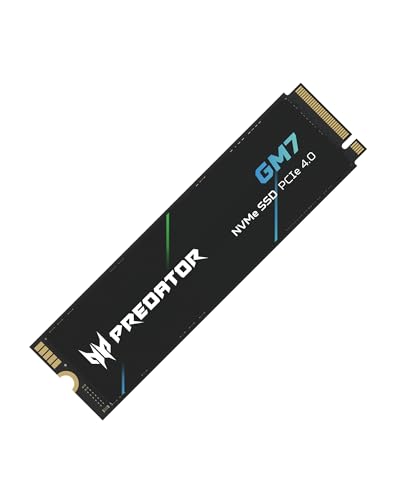
Acer Predator GM7 1TB SSD

Samsung SSD 9100 PRO 2TB, PCIe 5.0x4 M.2 2280

Fanxiang S690Q 1TB NVMe Gen4 SSD
- PCIe Gen4 x4 performance reaching transfer speeds up to 4800 MB/s
- Compatible with PlayStation 5 consoles, desktop PCs, and laptops
- Includes a thermal heat dissipation sticker to aid temperature management
- Combines 3D NAND flash with an SLC cache for efficient handling
- Rated speed of 4800 MB/s is below Sony's 5500 MB/s recommended tier for PS5
- Relies on a cooling sticker rather than a rigid metal heatsink enclosure
- No proprietary drive management software is specified in the package

M.2 Screws, Motherboard Screw for Asus Gigabyte

GMKtec M6 Ultra Mini PC
- Strong listed memory and storage configuration
- Supports up to three 4K displays
- Dual 2.5GbE Ethernet is uncommon on many compact PCs
- Includes USB4, Wi-Fi 6, HDMI 2.0, DisplayPort, and Bluetooth 5.2
- Operating system is not specified in the product data
- No customer reviews are available in the provided listing

PNY CS900 500GB 2.5" SATA III SSD
- Up to 550MB/s read and 500MB/s write speeds for quick boot times
- Standard 2.5-inch SATA III form factor fits most desktops and laptops
- Solid 500GB capacity for OS installation and essential applications
- Direct replacement path for slower mechanical hard disk drives
- Limited by SATA III interface ceilings compared to NVMe drives
- Specific endurance ratings such as TBW are not listed in the product data
- 500GB capacity may fill up quickly with large modern game installs

Samsung SSD 990 EVO Plus 2TB, PCIe Gen 4x4
Matching the Right Drive to Your System
If you are assembling an elite desktop with a cutting-edge motherboard, I would go with the Samsung 9100 PRO 2TB. It utilizes the PCIe 5.0 interface to achieve sequential read speeds up to 14,700 MB/s alongside a 5nm controller designed to maintain power efficiency. Dedicated hardware coverage from Tom’s Hardware often highlights how next-generation Gen5 bandwidth benefits heavy workstation tasks and massive file manipulation. For builders seeking exceptional speed on standard Gen4 motherboards, I would point toward the Acer Predator GM7 1TB, which reaches up to 7400 MB/s read speeds while using Host Memory Buffer and thermal throttling management to handle demanding gaming sessions without excessive heat.
Not every setup requires NVMe speeds, especially if you are refreshing an older rig or adding secondary space alongside the best hard drives to store photos and videos. In that situation, I suggest looking at the PNY CS900 500GB. This 2.5-inch SATA III drive delivers sequential read speeds up to 550 MB/s, offering a straightforward, low-power upgrade over traditional mechanical disks for everyday operating system boots and routine office computing.
FAQs
1. What is the difference between SATA and NVMe M.2 drives?
SATA drives connect through traditional cables or 2.5-inch drive bays and top out around 600 MB/s due to bus limitations. NVMe M.2 drives mount directly to the motherboard using PCIe lanes, allowing much higher bandwidth and lower latency. While SATA remains practical for simple backups alongside the best hard drives for photo storage, NVMe drives are preferred for modern operating systems and demanding games.
2. Do PCIe 5.0 SSDs require specialized cooling heatsinks?
Yes, Gen5 drives push extreme data rates and generate noticeable thermal output under load. Motherboards built for PCIe 5.0 typically include heavy integrated metal heatsinks or active cooling fans to prevent thermal throttling. Operating a Gen5 drive without adequate cooling can force the controller to throttle speeds dramatically to protect internal NAND flash chips.
3. Can a PCIe 4.0 drive work in an older motherboard?
PCIe interfaces are backward compatible, meaning a Gen4 or Gen5 drive will operate in an older Gen3 slot without issues. The drive will simply be capped at the maximum transfer ceiling of that older connection. For users who also move media offsite using the best external hard drives for photos and videos, standard NVMe drives provide plenty of internal operating speed regardless of slot generation.
4. Does SSD management software matter for performance?
Dedicated management software helps maintain drive health, check operating temperatures, and apply important firmware patches. Major storage manufacturers like Samsung provide specialized utility packages such as Magician to monitor drive life and optimize write caches. Keeping drive firmware updated ensures stability across different operating systems and motherboard chipsets.
Editor’s Verdict
When selecting the best SSDs for PC gaming and everyday productivity, the Acer Predator GM7 1TB delivers an outstanding balance of PCIe 4.0 speed, heat management, and practical reliability. For bleeding-edge workstation builds with next-gen motherboards, stepping up to the Samsung 9100 PRO 2TB provides the absolute fastest sequential throughput available.