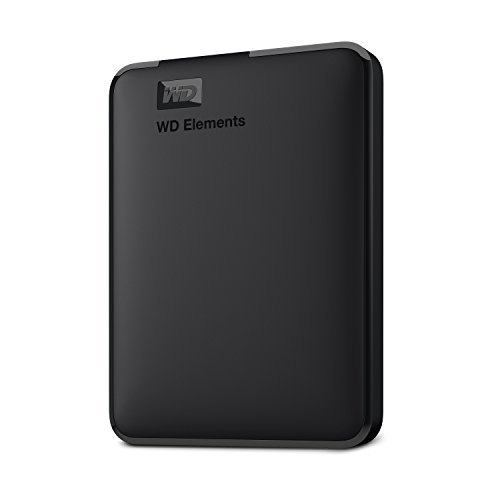

A hard drive stores data magnetically on one or more spinning circular platters, read and written by a moving head that hovers just above the platter’s surface without touching it. This entirely mechanical process, refined over decades, is the fundamental reason hard drives are slower than solid-state storage, which has no moving parts at all.
- Data is stored magnetically on spinning platters, not electronically.
- A moving read/write head accesses data, hovering just above the surface.
- This mechanical design is the core reason HDDs are slower than SSDs.
- Modern HDDs pack enormous data density onto increasingly precise platters.
The Platter and Magnetic Storage
Inside a hard drive, one or more rigid platters, coated with a magnetic material, spin at a constant speed measured in RPM, covered further in does hard drive RPM matter. Data is stored as microscopic magnetic patterns on this surface, with each tiny region’s magnetic orientation representing binary data.
The Read/Write Head
A read/write head, mounted on an arm that moves across the platter’s radius, hovers an extraordinarily small distance above the spinning surface, never physically touching it during normal operation. This head can both read existing magnetic patterns and write new ones by altering the magnetic orientation of specific regions as the platter spins beneath it.
Why This Design Limits Speed
Accessing data stored in different physical locations on the platter requires the head to physically move to that location and wait for the correct section to rotate underneath it, a process with inherent mechanical delay, as detailed by Tom’s Hardware. This “seek time” is the fundamental reason HDDs can’t match the near-instantaneous access speeds of electronic solid-state storage, covered further in SSD vs HDD.
Why Fragmentation Mattered for HDDs
Because accessing scattered data requires more head movement, files split into fragments across different platter locations took measurably longer to read on an HDD, which is why defragmentation was historically an important maintenance task, distinct from SSDs, which don’t benefit from defragmentation at all.
How Data Density Has Improved
Modern hard drives pack dramatically more data onto each platter than early models, through advances in magnetic recording precision and multiple stacked platters within a single drive enclosure, allowing multi-terabyte capacities in a standard 3.5-inch drive form factor.
Why the Platter Never Touches the Head
The read/write head flies on a microscopic cushion of air generated by the platter’s own rotation, hovering at a distance measured in nanometers. This precise engineering is why hard drives are sensitive to physical shock while operating, since a sudden impact can cause the head to contact the platter, causing damage covered in hard drive clicking noise.
Why this matters practically: understanding the mechanical nature of HDDs explains both their vulnerability to physical shock and why they remain a cost-effective choice specifically for large-capacity, less frequently accessed storage rather than a primary performance drive.
See also mechanical diagrams from iFixit and community discussion on r/buildapc.
Frequently Asked Questions
Does the read/write head physically touch the platter?
No, it hovers an extremely small distance above the spinning surface on a cushion of air generated by the platter’s rotation.
Why are hard drives slower than SSDs?
Because accessing data requires physically moving a mechanical head and waiting for platter rotation, unlike SSDs’ near-instant electronic access.
Why did fragmentation matter for hard drives?
Scattered file fragments required more physical head movement to read, directly slowing access compared to contiguous data.
Why are hard drives sensitive to physical shock?
A sudden impact while operating can cause the read/write head to contact the spinning platter, causing mechanical damage.