
Preserving important files, family media, and project backups requires storage media that stays dependable when sitting on a shelf or running daily. Finding the best SSDs and hard drives for long term storage depends heavily on whether you prioritize raw capacity or physical durability. Reviewing your archival strategy alongside the best hard drives for long term storage helps you build a sensible backup routine.
Recommended by Us

YOTUO 500GB Portable External HDD
- Protective silicone sleeve adds drop resistance for travel and desk use.
- Flexible connectivity options supporting both USB 3.0 and USB-C ports.
- Plug-and-play simplicity with no driver installation required.
- Seamlessly offloads older generation console games to free up internal console storage.
- Modest 500GB capacity fills up quickly with modern large game installations.
- Cannot run or store native PlayStation 5 or Xbox Series X/S games directly.
- As a mechanical hard drive, it cannot match the speeds of an external SSD.

Dogfish 2TB SSD for Mac mini M4 Internal Solid

- Generous 10TB storage capacity for extensive personal file backups
- Effortless plug-and-play setup for Windows systems via USB 3.0
- Sleek and compact desktop enclosure measuring 5.31 x 1.89 x 6.53 inches
- Proven Western Digital reliability for long-term data management
- Requires reformatting before functioning on Mac systems
- Specific read and write transfer rates are not stated in the official specs
- Weighs 2.09 pounds and requires desktop placement rather than portable pocket use
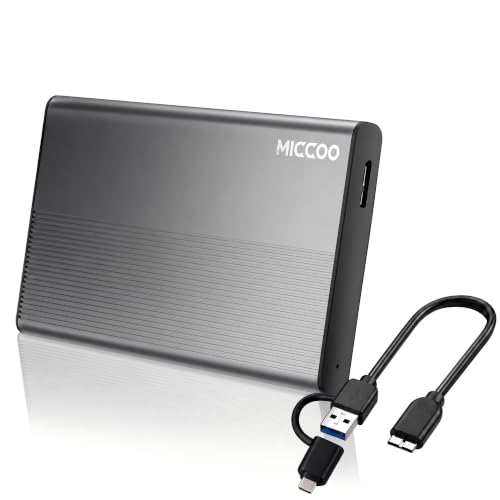
MICCOO 500GB External Hard Drive

YOTUO 750GB Portable External HDD
- Flexible connectivity supporting both USB-A (USB 3.0) and USB-C hardware
- Patented protective silicone sleeve adds everyday drop and shock resistance
- Convenient plug-and-play support across computers, mobile devices, and gaming consoles
- Lightweight and compact profile measuring under 0.6 inches thick
- Cannot run current-generation PS5 or Xbox Series X/S games directly from external storage
- Mechanical HDD speeds are inherently slower than solid-state drives
- Internal drive rotational speed (RPM) is not specified in the listing

YOTUO 1TB Portable External HDD
- Integrated silicone bumper adds drop resistance without extra bulk
- Plays previous-generation console games directly from the drive
- True plug-and-play usability across computers and gaming systems
- Lightweight design at just 0.3 pounds for easy portability
- Cannot run or store native PS5 or Xbox Series X/S games directly
- Traditional spinning hard drive mechanics are slower than SSDs
- Sustained read and write speeds are not specified in the listing

500GB External Hard Drive,USB 3.0 and USB-C
Selecting Reliable Hardware for Archiving Your Files
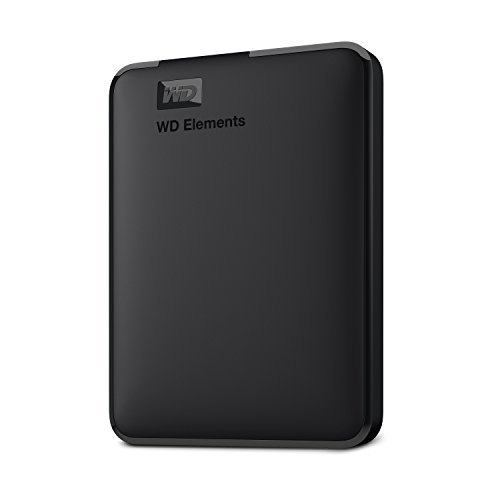
When deciding how to organize your archives, the storage technology should match how often you access the data. If you have massive archives spanning home videos, system images, and work libraries, I would go with the Western Digital 10TB Elements. Desktop drives from Western Digital offer expansive space that makes archiving simple, provided you keep the unit stationary on a desk with its dedicated power supply.
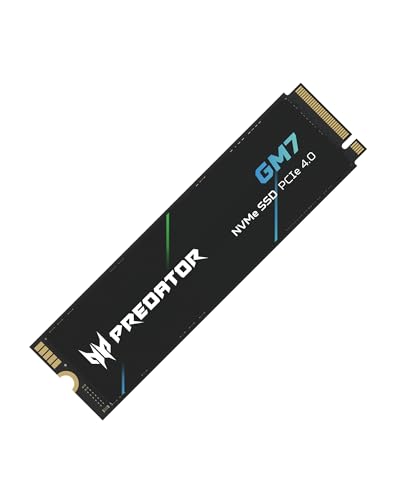
For those managing compact systems or specialized workloads, flash memory makes more sense. If you use a compact desktop setup, I would point you toward the Dogfish 2TB SSD for fast internal access, which boasts transfer rates up to 3300 MB/s for swift file retrieval. Meanwhile, if you want an affordable pocket companion for routine document backups and casual media, the YOTUO 500GB provides a handy shock-absorbing silicone sleeve to cushion against minor drops. Taking time to select the right device mirrors the approach needed when picking the best hard drives to store photos and videos for safe keeping.
FAQs
1. Can solid state drives hold data without power for years?
Solid state drives rely on flash cells that store electrical charges to preserve information. When stored in moderate temperatures, SSDs can retain files for extended periods, but they can experience charge leakage over many years if left unpowered. Connecting your drive once or twice a year refreshes the charge and helps maintain your data safely.
2. Are external mechanical hard drives better than SSDs for cold storage?
Mechanical drives store data magnetically on platters, making them well suited for offline cold storage where drives sit unpowered in a drawer. They offer significantly higher capacities at lower costs per gigabyte, though they remain vulnerable to physical drops. When choosing portable options, evaluating the best external hard drives for photos and videos helps ensure your chosen hardware matches your transport habits.
3. How often should archival storage drives be powered on?
Powering up your backup drives every six to twelve months is a sound practice for both technologies. For hard drives, spinning the mechanical spindle prevents lubricant from settling, while solid state media benefits from cell charge verification. Storage reporting from Tom’s Hardware regularly highlights the value of routine drive health checks to catch issues early.
4. What file system format is best for multi-platform backups?
Formatting your backup disk as exFAT provides the widest compatibility between Windows PCs and macOS computers without requiring third-party drivers. Drives pre-formatted in NTFS offer native writing on Windows but are typically read-only on Apple machines unless reformatted. Matching your file system to your household hardware is just as vital as choosing the best hard drives for photo storage across multiple devices.
Editor’s Verdict
Selecting the best SSDs and hard drives for long term storage comes down to your capacity needs and whether the hardware stays parked at a desk. For immense desktop archives, the Western Digital 10TB Elements delivers massive space for all your files. If you require swift internal flash performance for a compact machine, the Dogfish 2TB SSD is a dependable choice.